
.webp)


Is Metal Siding Cheaper Than Vinyl?
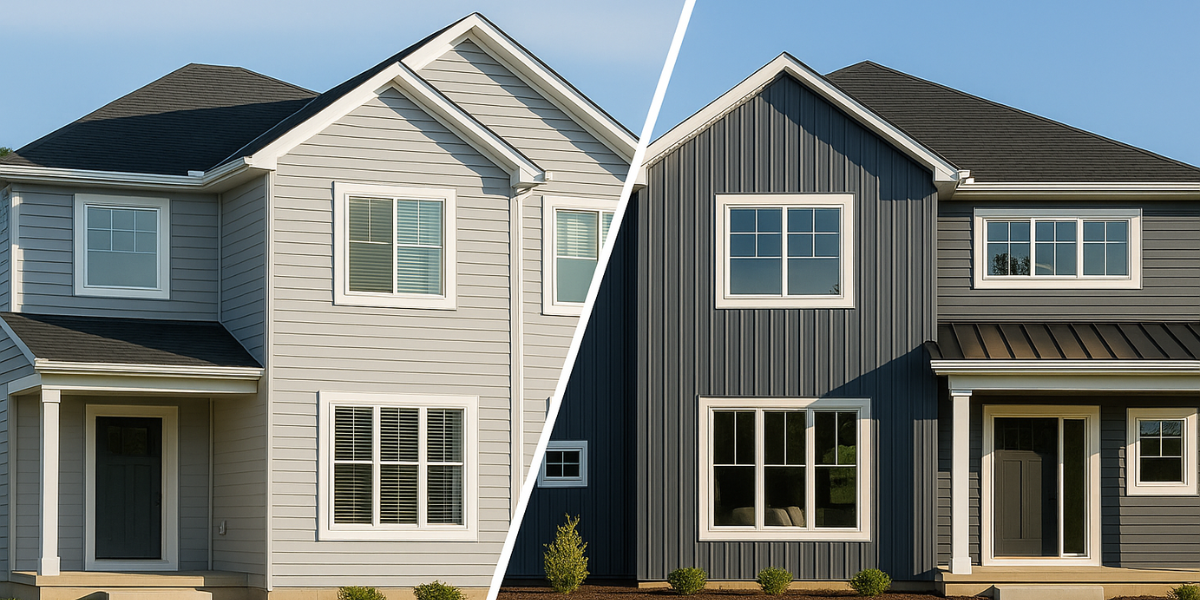
No, metal siding is not cheaper than vinyl. Vinyl siding costs $2 to $7 per square foot installed, while metal siding costs $3 to $10 per square foot installed, with high-end profiles running past that. The gap reverses over time, since steel siding lasts 40 to 60 years and vinyl lasts 20 to 40. Below we break the price bands apart by grade, apply them to a real house, explain exactly what drives the difference, and work out which material costs less across the life of a wall.
Is Metal Siding Cheaper Than Vinyl?
Metal siding is not cheaper than vinyl at the point of installation, and the difference is consistent across every grade of both materials. Vinyl holds the lower floor because it is the least expensive siding to manufacture and the fastest to hang. Metal carries a higher floor because the raw substrate costs more, the panels are heavier, and the installation demands more precision at every corner and opening.
Both bands are wide enough to overlap at the edges. A premium insulated vinyl package can price above a basic corrugated steel package, which surprises homeowners who assume the materials sit in fixed tiers. Getting quotes on both is the only way to know where a specific house lands, and that is exactly how we handle it on every siding installation where a homeowner is weighing the two.
What Is the Difference Between Vinyl and Metal Siding?
The difference between vinyl and metal siding is the substrate each one is made from. Vinyl siding is manufactured from polyvinyl chloride (PVC) resin, blended with additives that improve color retention, flexibility, and impact strength. Metal siding is formed from steel or aluminum coil, coated to resist corrosion and then painted at the factory.
Substrate determines nearly every downstream property. PVC is light, flexible, and moves noticeably with temperature. Steel and aluminum are rigid, non-combustible, and hold their dimensions across the same temperature swing. Those two facts explain most of what follows, from lifespan to how each material behaves in a cold snap.
How Much Does Metal Siding Cost Compared to Vinyl?
Metal siding costs roughly $1 to $4 more per square foot installed than comparable vinyl, though the picture sharpens once each material is broken into grades. The headline ranges of $2 to $7 for vinyl and $3 to $10 for metal describe the middle of the market. Grade-level figures from Western States Metal Roofing, Fixr, and NAHB-sourced cost data extend past those bounds at both ends.
Material and GradeInstalled Cost Per Square FootWhat Drives the RangeStandard vinyl$3.50 to $8.00Panel thickness and color gradeInsulated vinyl$4.00 to $12.00Foam backing adds weight and install timeCorrugated or ag panel steel$7.00 to $12.00Exposed fasteners install fastestSteel siding, general$5.00 to $12.00Gauge, profile, and paint systemMetal board and batten$9.00 to $14.00Concealed fasteners demand more laborAluminum siding$7.00 to $14.00Thickness, color, and limited availability
Two patterns show up immediately in those numbers. Fastener system separates the cheap metal from the expensive metal, since concealed-fastener flush wall panels run about twice the price of corrugated. Insulation separates the cheap vinyl from the expensive vinyl, because foam-backed panels are heavier and slower to hang. Broader siding replacement cost data across every material follows the same two patterns.
Is Steel or Aluminum Siding Cheaper?
Steel siding is cheaper than aluminum siding, usually by about 35% according to Western States Metal Roofing. Aluminum carries the premium because the raw metal costs more and because residential aluminum siding has become harder to source since its mid-century peak. Aluminum earns that premium in one specific situation, which is salt air, since steel corrodes near the coast and aluminum does not. Inland homes rarely need to pay for that advantage.
How Much Is Metal Siding for a 1500 Sq Ft House?
Metal siding for a 1,500 square foot house costs roughly $6,000 to $14,000 installed, though that figure depends on a distinction most homeowners miss. Siding is priced on exterior wall area, not on interior floor area. A 1,500 square foot floor plan does not mean 1,500 square feet of siding.
Exterior wall area on a 2,000 square foot home typically runs 1,800 to 2,200 square feet, and a single-story house with the same floor area as a two-story house will have noticeably different wall area because of its larger footprint and roofline. Wall area is the number a contractor measures and multiplies, which is why two homes with identical floor plans can come back with quotes thousands of dollars apart. Any estimate built off floor area alone will be wrong before the first panel is ordered.
How Much Does 2000 Sq Ft Vinyl Siding Cost?
Vinyl siding on a 2,000 square foot home costs roughly $7,000 to $16,000 installed, depending on whether the panels are standard or insulated. Standard vinyl on 1,800 square feet of wall area at $5 per square foot lands near $9,000. The same wall in insulated vinyl at $9 per square foot lands near $16,200. Steel on that wall runs $10,000 to $24,000 according to NAHB-sourced cost data, and aluminum runs $7,000 to $14,000.
How Much Does It Cost to Put Siding on a 1500 Sq Ft House?
Putting siding on a 1,500 square foot house costs roughly $5,000 to $22,500 across all common materials. Vinyl anchors the low end, metal and engineered wood occupy the middle, and cedar and fiber cement reach the top. Removal of the old siding is a separate line that adds $1,000 to $2,500, or $1 to $3 per square foot. The full cost to reside a house depends on how much of that tear-off the wall actually needs.
Why Does Metal Siding Cost More Than Vinyl?
Metal siding costs more than vinyl because six separate factors each push its price upward, and they compound rather than average out:
- Substrate cost. Steel and aluminum coil cost more per pound than PVC resin, and metal panels weigh far more per square foot
- Gauge. Thicker metal resists denting better and costs more, so a 26-gauge panel prices above a 29-gauge panel of the same profile
- Panel profile. Flush wall and board and batten profiles cost roughly double what corrugated costs
- Fastener system. Concealed-fastener panels hide every screw, which means more precision, more time, and more labor hours per wall
- Paint system. PVDF finishes carry 30 to 40 year chalk and fade warranties and price above standard polyester coatings
- Labor share. Labor runs 30% to 60% of a metal siding job and roughly 48% on steel, so any regional wage difference moves the total significantly
Labor share is the factor that varies most between markets. Crew rates across Central Washington sit below what the Puget Sound corridor commands, which narrows the metal premium on this side of the mountains compared with what a Seattle homeowner would see on the same house. Regional differences of that size can swing a whole-house quote by several thousand dollars on identical materials.
What Is the Cheapest Siding to Put on a House?
Standard vinyl is the cheapest siding to put on a house, starting near $3.50 per square foot installed. Its price advantage comes from three things at once: the material is inexpensive to manufacture, the panels are light enough for a small crew to handle quickly, and they arrive pre-cut with nailing holes already punched. The U.S. Census Bureau's Survey of Construction reports vinyl as the most commonly used siding on new homes, at roughly 25% of the residential siding market.
Market share of that size also means the widest selection of colors and profiles at the low end. Engineered wood sits a step above vinyl and delivers a different look for a moderate increase, with LP SmartSide and fiber cement occupying that next tier.
What Is the Least Expensive Way to Side a House?
The least expensive way to side a house is installing new siding over sound existing siding using furring strips, which removes the tear-off and disposal line from the quote entirely. That approach saves the $1,000 to $2,500 that removal typically adds. It only works when the existing wall is dry, flat, and structurally sound underneath, and skipping an inspection to save that money is how hidden rot gets sealed inside a wall for another thirty years. Any wall with soft sheathing, staining, or visible moisture needs the old material off before anything new goes on.
Is Metal Siding Cheaper Than Wood?
Yes, metal siding is cheaper than wood siding in most cases, both upfront and across the life of the wall. Natural wood siding runs $6.90 to $13.90 per square foot installed, and a 2,000 square foot home clad in premium cedar can reach $36,000. Steel covering the same house lands at $10,000 to $24,000.
Maintenance widens the gap further. Wood needs staining or repainting on a recurring cycle, and every one of those cycles carries labor. Metal carries a factory finish backed by a decades-long fade warranty and needs nothing beyond occasional rinsing. Cedar earns its price through appearance rather than economics, and cedar siding holds that appearance only as long as the finish is maintained.
Does Metal Siding Cost Less Over Time Than Vinyl?
Yes, metal siding often costs less than vinyl over a full ownership horizon, because vinyl usually needs replacing once inside a steel wall's service life. Steel siding lasts 40 to 60 years or more. Vinyl lasts 20 to 40 years, and Western States Metal Roofing notes that vinyl frequently begins fading after just 10 to 15 years, well before it stops performing.
Working the arithmetic on an 1,800 square foot wall makes the crossover visible. Standard vinyl at $5 per square foot costs about $9,000 today. Replacing it once at year 25 means a second installation plus $1,000 to $2,500 of tear-off, and the second install will be priced in future dollars rather than today's. Steel at $8.50 per square foot costs about $15,300 once. Across forty years the steel wall is a single line item while the vinyl wall is two, and the steel figure finishes lower before a single maintenance hour is counted.
Horizon length is what decides whether that math matters. A homeowner selling within five years captures none of it and should weigh upfront cost more heavily. A family staying twenty-five years captures all of it. That calculation shapes how we spec metal siding against the alternatives on every quote we write.
Is Metal Siding Better Than Vinyl?
Metal siding is better than vinyl on durability, lifespan, and fire resistance, while vinyl is better on upfront cost, color selection, and ease of individual panel replacement. Neither material wins every category, and the table below sets the trade-offs side by side.
FactorMetal SidingVinyl SidingUpfront cost$3 to $10 per square foot installed$2 to $7 per square foot installedLifespan40 to 60 years for steel, 50 plus for aluminum20 to 40 yearsFade resistancePVDF finishes warranted 30 to 40 yearsFading often visible at 10 to 15 yearsImpact behaviorDents under heavy hail, thicker gauge resists moreCracks on impact, brittle in deep coldThermal movementMinimal across wide temperature swingsExpands and contracts, can buckle at extremesFire ratingNon-combustible, Class A when installed correctlyCombustible PVCSeamsLong panels, seamless options availableMore than 150 on an average homeInsulationInsulated panels can cut heating and cooling up to 20%Insulated vinyl reaches R-2 to R-5RepairsSmall dents fixable, color matching is harderPanels swap easily, faded color rarely matches
Two rows deserve extra weight for inland Washington. Thermal movement matters here because the valley swings from deep winter cold to high summer heat within a single year, and that cycle is precisely what fatigues vinyl at its fastener slots. Fire rating matters because non-combustible cladding carries real value in a region that plans around wildfire season. Both materials appear on completed walls across the finished exteriors collection.
What Is the Most Durable Type of Siding?
Steel is the most durable type of siding among common residential materials, with a service life of 40 to 60 years or more and no vulnerability to rot, insects, or fire. Fiber cement sits close behind at 50 plus years and holds an advantage in impact resistance, since it does not dent. Aluminum matches steel on lifespan and beats it in salt air while denting more easily, because aluminum is a softer metal often produced at roughly half the thickness of vinyl.
Durability rankings shift depending on which threat is being ranked against. Hail favors fiber cement and thick-gauge steel. Wildfire favors any non-combustible material. Coastal salt favors aluminum outright. The composition behind fiber cement siding is what gives it that impact advantage.
What Is the Least Maintenance Siding?
Metal siding is the least maintenance siding available, requiring little beyond an occasional rinse with a garden hose and a yearly look for damage. A factory-applied PVDF finish holds its color for most of the panel's service life, which removes repainting from the ownership cost entirely. Vinyl runs a close second and needs the same periodic cleaning, though faded panels create a maintenance problem of a different kind, since a replacement panel will not match the weathered ones around it.
Wood sits at the opposite end and needs staining or repainting on a recurring cycle. Metal can be repainted if a homeowner wants a color change rather than because the finish failed, and painting metal siding is a choice rather than a maintenance requirement.
What Siding Increases Home Value?
Fiber cement and vinyl siding increase home value most reliably, and both return an unusually high share of their cost. Consumer Reports, citing the Journal of Light Construction's 2025 Cost vs. Value Report, puts vinyl siding replacement at 97% of cost recouped at resale and fiber cement at 114%. Only four remodeling projects of any kind performed better than fiber cement in that report.
Recouped percentages of that size make siding one of the strongest exterior investments available, well ahead of most interior work. New siding also improves energy performance, since insulated options reduce heat transfer through the wall assembly. Targeted siding repair often beats a full replacement, since a wall with isolated damage rarely needs a whole-house project.
Which Is Better, Vinyl or Metal Siding, for Your Home?
The better choice between vinyl and metal siding depends on six inputs specific to the house, worked in this order:
- Measure the exterior wall area. Not the floor area. Every dollar figure in a quote is built on this number, so an accurate measurement comes before any budgeting.
- Set the ownership horizon. Selling within five years favors upfront cost. Staying twenty years or more favors lifespan, since the replacement cycle enters the math.
- Weigh the climate. Wide temperature swings, hail exposure, and wildfire risk all push toward metal. Mild, stable conditions leave vinyl fully adequate.
- Price both materials on the same scope. Insulated vinyl against basic steel is a closer contest than most homeowners expect, and the only way to see it is two written quotes covering identical work.
- Read the warranty terms separately. Material warranties and chalk-and-fade warranties are different documents, and the second one governs how the wall looks in year fifteen.
- Confirm what each quote includes. Tear-off, disposal, house wrap, flashing at windows and doors, and trim all belong in the line items rather than in a surprise later.
Most homeowners find the answer resolves quickly once those six are on paper. There is no universally correct material here, only a correct match between a wall, a climate, and how long someone plans to live behind it. That is the conversation we have before quoting new siding on any home.
Frequently Asked Questions
Why Don't People Use Aluminum Siding Anymore?
People use aluminum siding less than they once did because vinyl arrived at a lower price point and took over the market it had built. Aluminum was the dominant residential siding through the mid-twentieth century, and it lost ground on cost rather than on performance. It remains harder to source today, which adds lead time to a project, and it dents more readily than steel because it is a softer and thinner metal. In coastal climates it is still the better metal, since it does not rust in salt air.
Does Metal Siding Rust?
Metal siding resists rust when it is properly coated, and the coating is what does the work. Steel siding is hot-dipped galvanized, meaning a zinc layer bonds to the steel and blocks corrosion before the paint system is applied. Bare or scratched steel exposed to persistent salt air will corrode, which is why steel is not recommended for coastal properties. Aluminum does not rust at all, which is its defining advantage.
Can Metal Siding Be Installed Over Vinyl Siding?
Metal siding can be installed over vinyl siding using furring strips, provided the wall underneath is dry and structurally sound. Furring strips create a flat mounting plane and a ventilation gap behind the new panels. This approach avoids $1,000 to $2,500 in tear-off and disposal cost. It also seals whatever is behind the old siding out of sight, so the wall needs inspection for moisture, soft sheathing, and pest damage first.
Does Vinyl Siding Crack in Cold Weather?
Yes, vinyl siding can crack in extreme cold, because PVC becomes brittle as temperatures drop. Impact that a panel would shrug off in summer can split the same panel in deep winter. Vinyl also contracts in cold and expands in heat, and that repeated movement works against the fasteners over years. Higher-grade vinyl is formulated to handle wider temperature ranges, so panel quality matters more in a cold climate than in a mild one.
How Long Does Vinyl Siding Last Compared to Metal?
Vinyl siding lasts 20 to 40 years while metal siding lasts 40 to 60 years or more, making metal roughly twice the service life. Appearance runs on a shorter clock than function for both. Vinyl often begins visibly fading at 10 to 15 years even though the panels still shed water correctly, while PVDF-finished metal carries chalk and fade warranties of 30 to 40 years.
Is Vinyl Siding Cheaper Than Metal?
Yes, vinyl siding is cheaper than metal siding upfront, at $2 to $7 per square foot installed against $3 to $10 for metal. The saving is real and immediate. Across a forty-year horizon the comparison narrows or reverses, since vinyl typically needs one full replacement in the span that a steel wall serves without one.
The Bottom Line
Metal siding costs more than vinyl to install, and that is the honest answer to the question. Vinyl runs $2 to $7 per square foot installed and metal runs $3 to $10, with the gap driven by substrate cost, gauge, panel profile, fastener system, paint system, and labor hours. Measured over a full ownership horizon the ranking can flip, because steel serves 40 to 60 years against vinyl's 20 to 40 and skips the replacement cycle that doubles a vinyl wall's lifetime cost.
Neither material is the right answer for every house. A homeowner selling soon should weigh the upfront number heavily, and a family settling in for decades should weigh lifespan. Around East Wenatchee we tend to steer the conversation toward how long someone plans to stay and what the winters do to a wall, because those two answers settle it faster than any spec sheet. If you want a straight read on which material fits your home, AZ Builders is glad to measure the walls and price both. Reach out whenever you want a free estimate.
.webp)

.webp)
.webp)
You May Also Like

.webp)
%201.webp)
%202.webp)
%203.webp)
.webp)


.avif)