


Where Can I Buy Replacement Aluminum Siding

You can buy replacement aluminum siding from wholesale building-supply distributors, manufactured-home and RV suppliers, and online retailers. Big-box home centers stock aluminum trim, soffit, and fascia, but full aluminum siding panels usually require a siding supply house or a special order.
Finding a seller solves only half the problem, because the new panel has to match your existing profile, gauge, and color. Below, we cover where each type of seller fits, why aluminum siding is harder to find than it used to be, how to match your profile before you buy, what a single piece costs, how to replace a section, and when replacing the whole wall makes more sense. We also cover where to find replacement vinyl and Masonite siding pieces, since both materials raise the same matching problem.
Where Can I Buy Replacement Aluminum Siding?
You can buy replacement aluminum siding from wholesale building-supply distributors, manufactured-home and RV suppliers, online retailers, and manufacturer dealer networks. Each seller type stocks a different slice of the aluminum siding market, so the right source depends on whether you need a full house panel, a trim piece, or a mobile home panel.
Seller TypeWhat They StockBest FitWholesale building-supply distributors (such as ABC Supply)Full aluminum siding panels, soffit, fascia, and trim from aluminum siding manufacturersHorizontal house siding in standard residential profilesBig-box home centers (such as Lowe’s, Home Depot, and Menards)Aluminum fascia, soffit, Z flashing, J-channel, and corner trim; full panels vary by store or need a special orderTrim, flashing, and accessory repairsManufactured-home and RV suppliersWide vertical and embossed aluminum panels, starter strips, and divider barsMobile homes, manufactured homes, and trailersOnline retailers and manufacturer dealer locatorsSmaller panel runs, patches, corner caps, and links to regional stockistsHomeowners who already know their exact profileLocal siding contractors and salvageLeftover stock and salvaged panels from re-siding jobsOlder or discontinued profiles
Wholesale distributors carry the deepest aluminum inventory. ABC Supply describes itself as a wholesale distributor of aluminum siding, soffit, and fascia, and lists aluminum siding partners including Alsco, Gentek, Mastic, Quality Aluminum Products, and Rollex, though not every brand is available at every branch.
Big-box home centers carry the smaller aluminum components. Lowe’s aluminum siding category, for example, centers on aluminum fascia, Z flashing, and vented and solid soffit rather than full horizontal siding panels.
Where Can I Buy Pieces of Replacement Aluminum Siding?
You can buy pieces of replacement aluminum siding from siding supply houses, local siding contractors with leftover stock, and manufactured-home suppliers that sell single panels. Single aluminum panels rarely sit on retail shelves, so homeowners on DIY forums such as Fine Homebuilding consistently report the best luck at siding supply houses and with contractors who keep leftover material from past jobs.
Leftover material from past jobs is the most reliable match for older homes. A contractor who re-sided a neighboring house from the same era often holds the same profile in storage, and that salvaged panel already carries a similar weathered finish.
Can You Buy Aluminum Siding Anymore?
Yes, you can still buy aluminum siding, but aluminum siding now sells mostly through wholesale supply houses and specialty suppliers instead of retail shelves. The shift happened because new homes moved to other materials decades ago.
Aluminum siding no longer appears as its own category in national housing data. The U.S. Census Bureau’s Survey of Construction reports that 26% of homes started in 2024 used vinyl siding, a figure that includes vinyl-covered aluminum, as their principal exterior wall material. Stucco followed at 25% and fiber cement at 23%.
Vinyl and fiber cement took the market that aluminum once held. NAHB analysis shows vinyl’s market share peaked at 40% in 2001, while fiber cement gained more than 15 percentage points over the last 20 years. Homeowners on the Fine Homebuilding forum describe the result plainly: aluminum siding has become hard to find outside a few basic styles and colors.
How Do I Match My Aluminum Siding Profile Before Buying?
You match your aluminum siding profile before buying by recording the panel’s orientation, exposure, gauge, texture, and lock style, then bringing a sample to the supplier. Aluminum profiles vary by manufacturer and decade, so a panel that looks close from the street can fail to lock into the course above it.
- Note the orientation. Record whether the siding runs horizontally as lap siding or vertically as board-and-batten style panels.
- Measure the exposure. Exposure is the visible height of each course. A double 4 panel shows two 4-inch courses per panel, and a double 5 panel shows two 5-inch courses.
- Measure the gauge. Gauge is the metal thickness, listed in thousandths of an inch, such as .019 inch for common residential panels.
- Check the texture. Note whether the face is smooth or embossed with a woodgrain pattern.
- Identify the lock style. Look at how the bottom edge hooks into the panel below, and check the back of a loose panel for manufacturer markings.
- Bring a sample. A cutoff or photo with a tape measure in frame lets the supplier compare your panel against current profiles.
A sample panel removes guesswork at the counter. Suppliers match profiles by physical comparison far more reliably than by a written description of color and size.
Is Mobile Home Aluminum Siding the Same as House Siding?
No, mobile home aluminum siding is not the same as house siding. Mobile home aluminum siding comes in wide vertical sheets, such as an embossed panel measuring about 45-3/4 inches overall, with 45 inches exposed, by 96 inches long, sold by one manufactured-home supplier.
House siding, by contrast, installs in narrow horizontal courses that interlock row by row. The two systems use different fasteners, trim, and starter pieces, so manufactured-home and RV suppliers remain the right source for mobile home panels.
How Much Does One Piece of Aluminum Siding Cost?
One piece of aluminum siding costs about $20 for a small trim component and about $193 for a full-width manufactured-home panel, based on one manufactured-home supplier’s current catalog. That catalog lists a 14-foot divider bar at $19.77, a bottom starter set at $28.82, and an embossed 45-by-96-inch panel at $192.70.
Shipping raises the true cost of a single panel. Full aluminum panels often ship freight only because of their length, so one panel can cost far more delivered than at the counter.
Installed repair work follows a different price model. Fixr reports that siding repairs cost $2 to $20 per square foot, a range similar to full replacement pricing, which is why the size of the damaged area matters so much.
Can I Replace a Section of Aluminum Siding?
Yes, you can replace a section of aluminum siding by unlocking the damaged panel from the course above, cutting it free, and locking a matching panel into place. A zip tool releases the lock between courses, and the new panel slides up under the course above before it locks into the course below.
Small dents and punctures do not always need a new panel. You can repair a hole with a patch, filler, and touch-up paint when the damage covers only a few square inches.
Patch-first thinking applies to other materials as well. Many siding repairs cost far less than a new course of panels, provided the sheathing behind the damage stays dry and sound.
Why Doesn’t New Aluminum Siding Match the Old Color?
New aluminum siding doesn’t match the old color because decades of sun exposure fade and chalk the factory finish on existing panels. A brand-new panel in the same original color still looks brighter than its weathered neighbors.
Weathered neighbors offer the best fix. Many homeowners move an original panel from a less visible wall, such as the back of the garage, to the damaged front spot, then install the new panel where nobody looks closely. Painting the new panel with a quality exterior paint, matched to the faded color, closes any remaining gap.
What Is the Best Option for Replacing Aluminum Siding?
The best option for replacing aluminum siding is replacing the full wall or the whole house with a modern siding material once repair costs approach 50% of full replacement, the threshold Fixr recommends. Past that point, patching keeps spending money on a material that can no longer be matched.
Modern materials now cover most homes that once wore aluminum. The common replacement choices include:
- Fiber cement: used on 23% of new homes started in 2024, and recoups 114% of its cost at resale in JLC’s 2025 Cost vs. Value report.
- Vinyl: the most common new-home siding at 26%, and recoups 97% of its cost at resale in the same report.
- Engineered wood: delivers the look of wood lap siding with factory-applied protection against moisture.
- Steel and metal siding: keeps a metal exterior while offering current profiles and colors that are still in production.
Fiber cement siding leads the growth among these options. NAHB analysis of Census data shows fiber cement gaining more than 15 percentage points of new-home market share in 20 years, the strongest trend in exterior materials.
Material choice also depends on climate. The hot summers and cold winters we see in Central Washington put every exterior through wide temperature swings, so the right material matters as much as the right match.
Budget follows the material. JLC’s 2025 Cost vs. Value report puts the average vinyl siding job near $18,000 and the average fiber cement job above $21,000, and home size and trim complexity drive the final replacement cost.
A full siding replacement also exposes what sits behind the old aluminum. We check the sheathing and weather barrier once the old panels come off, so hidden moisture damage gets fixed before new siding covers it again.
Where Can I Buy Replacement Vinyl Siding Pieces?
You can buy replacement vinyl siding pieces from big-box home centers, siding supply distributors, and the original manufacturer’s dealer network. Vinyl pieces are far easier to find than aluminum because vinyl remains the most common siding on new homes.
That large installed base keeps common vinyl profiles in stock. Census data shows vinyl on 26% of homes started in 2024 and on 40% at its 2001 peak, so home centers like Lowe’s carry vinyl siding as a standard category alongside fiber cement, wood, and metal.
Vinyl replacement pieces raise the same matching problem as aluminum. Profile, exposure, and color must line up, and sun-faded vinyl rarely matches a new panel from the same color line. Moving an original piece from a hidden wall works for vinyl just as it does for aluminum.
Some vinyl colors are discontinued entirely. In that case, re-siding one full elevation with new siding hides the color change at a corner, where the eye expects a break, instead of in the middle of a wall.
Can You Still Buy Replacement Masonite Siding?
No, you cannot still buy new replacement Masonite siding, because Masonite discontinued its siding in 2001 after a class-action lawsuit over rot, according to Angi. Masonite siding is a hardboard made from wood fibers, wax, and resin.
The Masonite class action covered an estimated 4 million homeowners with hardboard siding installed between January 1, 1980, and January 15, 1998. Combined settlements involving Masonite building products paid homeowners more than $1 billion, according to class counsel Lieff Cabraser.
Replacement Masonite pieces now come from salvage or from modern substitutes. Salvaged hardboard from a garage or hidden wall works for small repairs, while LP SmartSide engineered wood siding reproduces the lap look with modern moisture treatment for larger sections.
Hardboard behaves more like wood than metal once moisture gets in. The swelling, soft spots, and peeling paint that show up on old wood siding are the same warning signs to check on aging Masonite before you decide between a patch and a replacement.
Frequently Asked Questions
Should I Repair or Replace Aluminum Siding?
You should repair aluminum siding when damage is limited to a few panels and you can source a match, and replace it when repair costs approach 50% of full replacement cost. A walkthrough by experienced siding specialists shows whether the damage stops at the panels or reaches the sheathing behind them.
Can You Make Your Own Aluminum Siding Pieces?
Yes, you can make your own aluminum siding pieces for trim, corners, and simple flat profiles by bending aluminum coil stock on a siding brake. Experienced installers on DIY forums report bending their own corner pieces, though lapped panels with interlocking edges still need a factory-made match.
Can I Paint New Aluminum Siding to Match?
Yes, you can paint new aluminum siding to match the faded color of the existing panels. Clean the new panel, prime it with a primer rated for aluminum, and finish it with a quality exterior house paint tinted to the weathered color.
How Do You Match Siding on a Home Addition?
You match siding on a home addition by sourcing the same profile and exposure as the original house, then painting or selecting a color that blends with the weathered finish. When the original aluminum is no longer available, a home addition often gets a modern siding in a complementary color, with a trim break where the addition meets the house.
Is It Worth Replacing All the Siding Instead of One Section?
Yes, it is worth replacing all the siding instead of one section when the original material is discontinued or repairs approach half the replacement cost. Full siding replacement recoups 97% of its cost for vinyl and 114% for fiber cement in JLC’s 2025 Cost vs. Value report, and the decision to reside a house ends the search for matching pieces for good.
Where Can I Buy Aluminum Siding Trim and Corner Caps?
You can buy aluminum siding trim and corner caps at big-box home centers, siding supply distributors, and online retailers. Home centers stock aluminum fascia, soffit, Z flashing, J-channel, and corner trim, which makes trim the easiest aluminum siding component to replace.
The Takeaway
Replacement aluminum siding sells through wholesale distributors, manufactured-home and RV suppliers, online retailers, and local contractors with leftover stock, while big-box stores mainly cover trim, soffit, and fascia. The same lesson applies to aluminum, vinyl, and Masonite: identify the exact profile, exposure, and gauge first, then source the piece, and move a weathered panel from a hidden wall when color matching fails. Once repairs approach half the cost of replacement, a modern material like fiber cement, vinyl, or engineered wood ends the search for matching parts.
We help homeowners across Central Washington decide between a targeted repair and a full re-side, based on what we find behind the old panels.
At AZ Builders LLC, we install siding with premium materials and stand behind the finished work.
When you’re ready to compare your options, we’d be glad to walk your exterior and prepare a free estimate.


You May Also Like
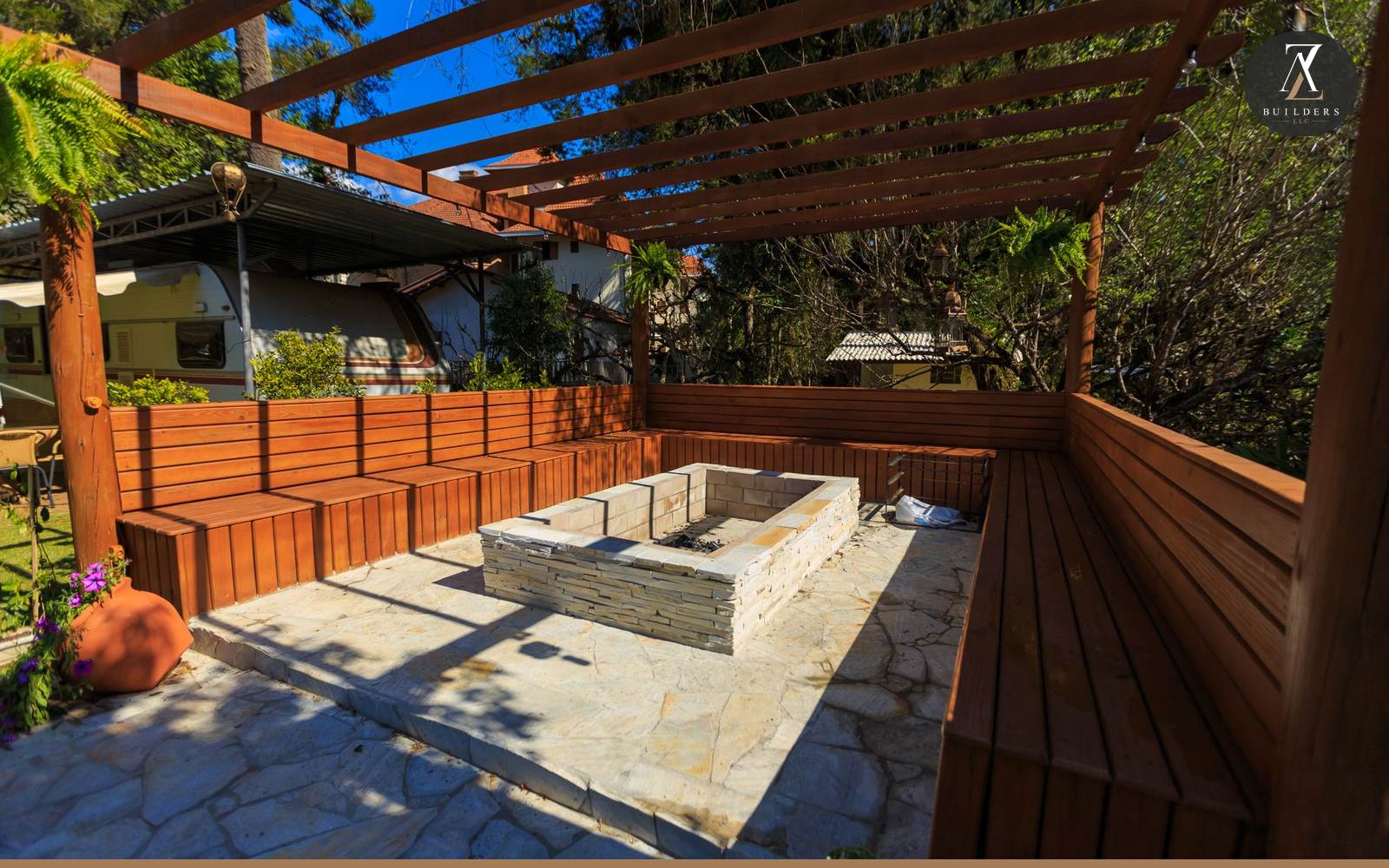

Can You Put a Fire Pit Under a Pergola
Yes, a fire pit can go under a pergola with non-combustible materials, enough height, and an open roof. Learn the clearances, fuel choices, and build steps.


