
.webp)


How Much Is a One Day Bathroom Remodel?
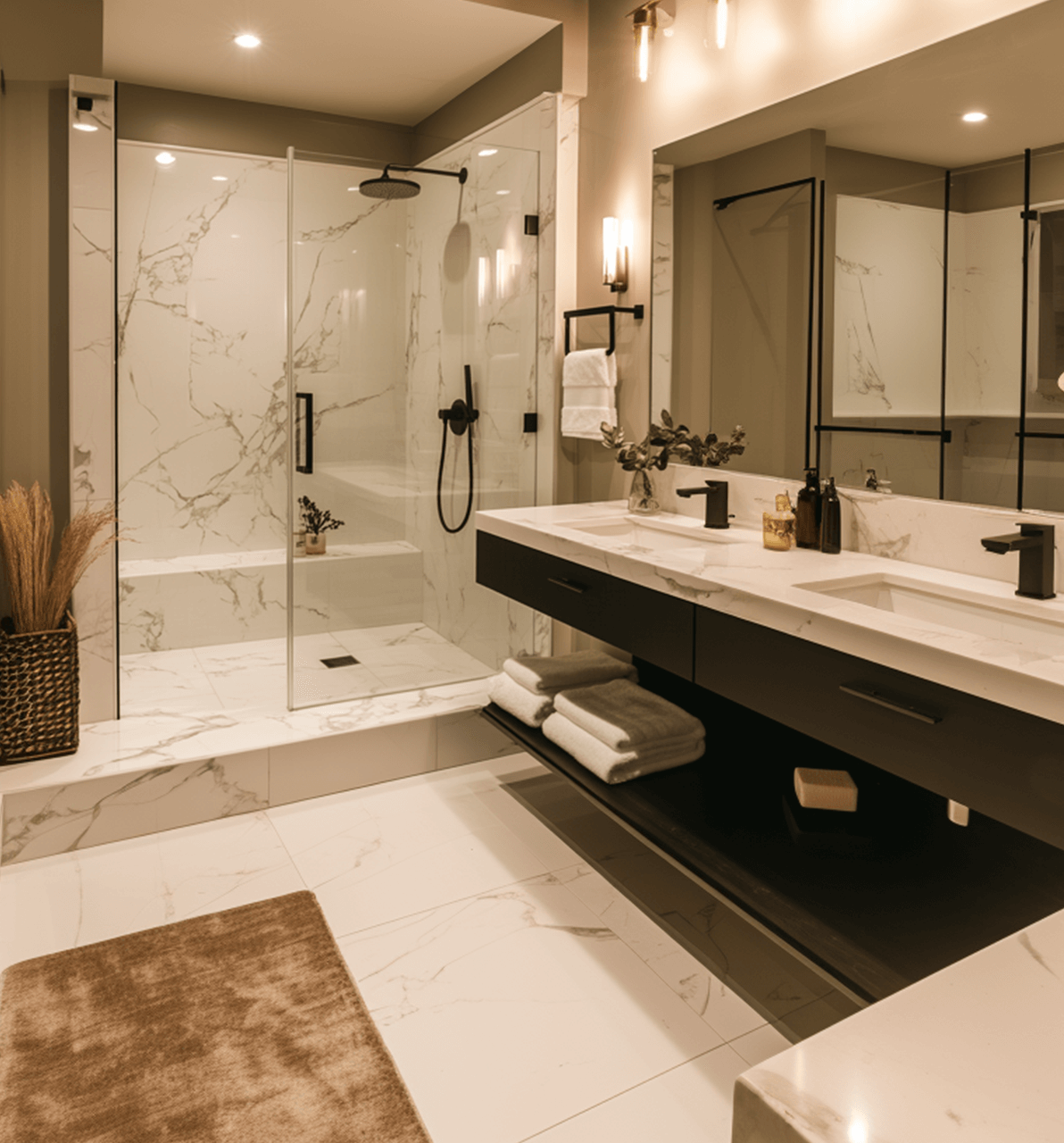
A one-day bathroom remodel costs $4,000 to $15,000, and most homeowners spend $6,000 to $12,000. That price buys replacement of the wet area alone, meaning the tub or shower, the wall surround around it, and the fixtures attached to it. The rest of the room stays exactly as it is. Below we break down what each component costs, why labor takes such a large bite, which projects actually finish inside a single day, and what a one-day price leaves on the table compared with a full renovation.
How Much Is a One Day Bathroom Remodel?
A one day bathroom remodel runs $4,000 to $15,000, with the typical project landing between $6,000 and $12,000. Where a project lands inside that band depends on three things: the unit going in, the surface area of wall being covered, and the labor rate in the region. A straight acrylic tub swap sits near the floor of the range. A premium walk-in unit with hydrotherapy jets and built-in seating sits near the ceiling of it.
Regional pricing moves the number more than most homeowners expect. Houzz reported in its 2026 U.S. Houzz and Home Study that median spending on a primary bathroom climbed to $15,000 in 2025, up from $13,000 the year before, and the Harvard Joint Center for Housing Studies projects total U.S. home improvement spending will reach $522 billion in 2026. Rising material and labor costs push every tier of bathroom work upward, and one-day systems are not exempt from that pressure.
What Is a One Day Bathroom Remodel?
A one day bathroom remodel is the replacement of an existing tub or shower, its wall surround, and its fixtures using pre-measured acrylic or composite units installed inside the existing footprint. The word "footprint" carries the whole concept. The new unit drops into the space the old one occupied, connects to the drain already sitting there, and covers the same wall area the old surround covered. Nothing moves, so nothing has to be rebuilt.
That footprint rule is what separates a one-day project from a bathroom renovation. A renovation opens walls, changes layouts, and replaces surfaces the wet area never touched. A one-day system deliberately refuses all of that in exchange for speed.
How Do They Remodel a Bathroom in One Day?
Contractors remodel a bathroom in one day by measuring and manufacturing the replacement unit weeks before installation day. Manufacturing ahead of time is the entire mechanism. A technician templates the alcove during the estimate visit, the acrylic tub, shower base, and wall panels are produced to those exact dimensions, and the parts arrive cut, drilled, and ready to seat. Installation day carries no fabrication, no tile setting, and no cure time for mortar or grout.
Cure time is the hidden reason conventional bathroom work takes weeks. Tile needs thinset to set, grout needs to harden, and waterproofing membranes need to dry before water ever touches them. Acrylic and composite panels skip every one of those waiting periods because they arrive as finished surfaces with sealed seams.
How Long Does a One Day Bathroom Remodel Actually Take?
A one day bathroom remodel actually takes eight to ten working hours on site. Crews usually arrive between 7 and 8 in the morning, spend the first two to three hours on demolition and haul-off, set the new base and wall panels through the middle of the day, and finish with fixtures, caulking, and cleanup. Most homeowners can use the shower again the following morning once the sealant has cured overnight.
What Is Included in the Cost of a One Day Bathroom Remodel?
The cost of a one day bathroom remodel includes four components: the tub or shower unit, the wall surround, the installation labor, and the hardware attached to both. America's Dream HomeWorks publishes a component breakdown that tracks closely with what installers across the country quote, and the figures below reflect that breakdown.
ComponentTypical Cost RangeWhat It CoversTub, Shower, and Fixtures$1,500 to $4,000The acrylic or fiberglass unit, showerhead, mixing valve, and trimWalls and Surrounds$1,000 to $3,000Waterproof acrylic wall panels and seamless linersInstallation and Specialized Labor$2,000 to $4,000Certified technicians, demolition, haul-off, and same-day plumbing tie-inHardware and Accessories$500 to $1,000Built-in shelving, grab bars, shower doors, and niches
Add the four component ranges together and the arithmetic lands squarely on the $5,000 to $12,000 figure most installers quote. Installers who quote well under that floor are usually pricing a tub liner rather than a full unit replacement, which is a different product with a different lifespan. The same four components price out differently at larger scopes, since broader remodeling costs scale with the number of surfaces a crew has to touch.
Why Is Labor Such a Large Share of a One-Day Bathroom Price?
Labor is such a large share of a one-day bathroom price because an entire remodel crew's day gets compressed into a single eight-hour window. The Home Depot reports that labor accounts for 40% to 65% of a bathroom budget, and a one-day install sits at the upper half of that spread. A two or three person certified crew handles demolition, disposal, waterproofing, setting, and plumbing tie-in without a second day to absorb any of it.
Plumbing tie-in is the part that demands certification. The drain connection, the mixing valve, and the overflow all get reconnected and pressure-checked the same afternoon the old unit came out, with no rough-in inspection window to catch a mistake later. That compression is why companies staff these jobs with technicians trained on one specific system rather than general laborers.
General labor rates then move the total up or down by region. In Central Washington, crew rates sit below what the Puget Sound market commands, which is why the same acrylic package quotes lower on this side of the mountains than it does in Seattle. Rate differences of that size can swing a quote by $1,000 or more on identical materials. Compressed schedules raise labor rates in every room of a house, and project timelines shift crew pricing the same way in a kitchen as they do in a bathroom.
How Much Does a One Day Bathroom Remodel Cost by Project Type?
A one day bathroom remodel costs different amounts by project type, and three tiers cover almost every job:
- Basic tub or shower replacement, $4,000 to $9,000. An old tub or shower comes out and a standard prefabricated acrylic unit goes in at the same size. This tier carries the lowest material cost and the shortest install day.
- Tub-to-shower conversion, $4,500 to $11,000. The bathtub comes out entirely and a low-threshold shower base takes its place. The extra cost covers the base, the larger wall panel area, and a glass or acrylic door.
- Premium walk-in or accessibility tub, $6,000 to $15,000 and up. Walk-in tubs with sealed doors, hydrotherapy jets, or air-jet systems sit at the top of the range, and safety-focused packages with seating and grab bars price near the same level.
Accessibility demand is pushing that third tier harder every year. AARP research from 2024 found that 75% of adults age 50 and older want to stay in their current homes, and 72% of those planning modifications expect to change a bathroom. Finished wet-area work across all three tiers sits in the completed projects collection.
What Is the Average Cost to Remove and Replace a Bathtub?
The average cost to remove and replace a bathtub is $1,500 to $5,000 when the new tub sits in the original footprint. Removal alone accounts for $300 to $800 of that figure, and older cast-iron tubs cost more to take out because they usually have to be broken apart inside the room before the pieces can be carried through a standard door. Disposal fees for heavy tile and cast iron are a common line item homeowners overlook.
How Much Does a Walk-In Tub Cost?
A walk-in tub costs $6,000 to $15,000 installed, with hydrotherapy and air-jet models reaching the upper end of that range. The premium buys a watertight door, a low step-over threshold, a molded seat, and a faster-draining valve so the bather is not sitting in cooling water. Safety is the reason these units justify the premium. The Centers for Disease Control and Prevention found that roughly 235,000 Americans are treated in emergency rooms each year for bathroom injuries, that falls cause about 80% of them, and that more than a third happen while bathing or stepping in and out of a tub.
What Is the Average Cost of Converting a Bathtub to a Shower?
The average cost of converting a bathtub to a shower is about $3,000, with the full range spanning $1,500 to $8,000 according to Angi's 2026 cost data. HomeGuide places the same project at $2,000 to $12,000 and reports that most homeowners land between $3,000 and $7,000. The spread comes down to one decision, which is whether the new shower is a prefabricated unit or a tiled build.
Prefabricated conversions run $2,000 to $6,000 and finish in a day. Tiled walk-in showers run $6,000 to $12,000 and take several days because tile, waterproofing membrane, and grout all need cure time. Curbless entries, which remove the threshold completely, cost $8,000 to $15,000 because the subfloor has to be recessed to keep water draining the right direction.
How Much Does It Cost to Remove a Bathtub and Make a Walk-In Shower?
Removing a bathtub and making a walk-in shower costs $2,000 to $12,000, depending on whether the finished shower is prefabricated or tiled. A prefab acrylic base and panel kit installed over the existing drain sits at the low end. A custom tiled walk-in with a mortar-bed shower pan and frameless glass sits at the high end, and shower pan installation alone accounts for $900 to $3,500 of that total.
Can a Bathtub Be Replaced in One Day?
Yes, a bathtub can be replaced in one day, as long as the drain stays in its original position and the new unit matches the existing alcove dimensions. A drain that stays in position means no wall opening, no new venting, and no inspection wait. The installer cuts the old unit free, seats the new base over the same trap, secures the wall panels to the existing studs, and seals the seams.
Inspection waits are what turn a same-day job into a multi-week job. Moving a drain even a few inches means opening the floor, cutting into joists in some cases, running new drain and vent lines, and scheduling a plumbing inspection before anything gets closed back up. Older homes add a second complication, since many tubs built before modern code was adopted drain through a 1.5 inch line while current shower requirements call for a 2 inch drain.
Do You Need a Permit for a One Day Bathroom Remodel?
Permit requirements for a one day bathroom remodel depend on whether plumbing moves. Most Washington jurisdictions exempt like-for-like fixture replacement in the same location, which covers the majority of one-day installs. Relocating a drain, adding an electrical circuit for heated flooring, or altering piping concealed inside a wall does require a plumbing or electrical permit, and permit fees commonly run $200 to $600. Local rules vary between cities and counties, so the installer should confirm the requirement in writing before the install date is booked.
What Is Not Included in a One Day Bathroom Remodel?
A one day bathroom remodel does not include anything outside the wet area. The crew works inside the existing footprint, which leaves a specific set of items out of scope:
- Flooring updates, and any repair to the subfloor underneath it
- The vanity, sink, countertop, and toilet
- Relocating plumbing lines or moving electrical outlets and switches
- Repairing hidden mold, rot, or water damage found inside the walls
- Layout changes, wall removal, and window or door alterations
Hidden damage is the exclusion that surprises homeowners most often. This Old House surveyed 1,000 homeowners who had completed a bathroom project in January 2026 and found that 37% spent more than they expected, and that roughly 70% of tub-to-shower projects hit at least one surprise cost, most often structural repair or water damage discovered behind the tub. Rotted studs and soft subfloor have to be repaired before a new unit can be seated safely, and that repair is billed separately. Scope discipline is the most reliable protection against that, and trimming costs starts with deciding early what stays untouched.
What Is a Realistic Budget for a Bathroom Remodel?
A realistic budget for a bathroom remodel depends entirely on scope, and The Home Depot groups the options into three tiers: quick bath updates at $3,000 to $8,000, minor remodels at $15,000 to $25,000, and major remodels at $30,000 and up. Those tiers describe whole-room work rather than wet-area work, which is why a one-day price and a renovation price can look so far apart while both being accurate.
Structural work is what separates the tiers. The Home Depot reports that structural changes typically increase total project cost by 30% to 100%, because moving a wall or a fixture triggers new framing, new supply and drain lines, and additional permitting. A full renovation absorbs those costs on purpose in order to fix the layout, the surfaces, and the systems in one pass.
Can I Remodel a Bathroom for $5,000?
Yes, you can remodel a bathroom for $5,000, as long as the work stays cosmetic and the layout does not change. A $5,000 budget covers a prefabricated tub or shower replacement, a new mixing valve and showerhead, fresh paint, and updated lighting. It does not cover new tile flooring, a new vanity, and a new tub in the same project. Homeowners at this budget get the most visible improvement by putting the entire amount into the wet area, since that is the surface guests and buyers notice first.
What Does a $10,000 Bathroom Remodel Look Like?
A $10,000 bathroom remodel looks like a complete wet-area replacement plus two or three supporting updates. At that budget a homeowner can install a new acrylic shower or tub with full wall surrounds, replace the vanity and sink, update the flooring, and add new lighting and a ventilation fan, all without moving a single fixture. Holding the layout steady is what makes the number work. The moment a toilet or shower drain moves, $2,500 to $5,000 of the budget shifts from finishes to plumbing.
Are One-Day Bath Remodels Worth It?
One-day bath remodels are worth it for homeowners who need a fast, clean wet-area update and whose plumbing is staying exactly where it is. They are the wrong tool for a homeowner who wants a new layout, new flooring, a new vanity, or a fix for damage behind the walls. The table below sets the two approaches side by side using figures from The Home Depot, Angi, and the Cost vs. Value Report published by Zonda.
FactorOne-Day Bath RemodelFull Bathroom RenovationTypical spend$4,000 to $15,000$15,000 to $30,000 and upTimeline on site8 to 10 hours2 to 6 weeksWork coveredTub or shower, surround, fixturesWhole room, including floor, vanity, and toiletCustomizationSet catalog of sizes, colors, and finishesOpen material and layout selectionHidden damageBilled separately, can delay the installRepaired as part of the project planPermitsUsually none for same-location swapsRequired when plumbing, wiring, or walls moveResale returnPartial, limited to the wet areaAbout 74% to 80% recouped at midrange scope
The midrange bathroom renovation currently recoups about 74% to 80% of its cost at resale, the strongest interior return the Cost vs. Value Report has recorded since 2007. Upscale bathroom projects recoup roughly 45%, which means spending more does not reliably return more. Midrange scope hits the sweet spot because its finishes appeal to the widest pool of buyers. Recovered resale value shows up only at the point of sale, so the daily use of the space carries most of the return for anyone staying put.
Does Replacing a Bathtub With a Shower Devalue a House?
Replacing a bathtub with a shower devalues a house only when it leaves the home with no bathtub at all. A house with two or three bathrooms loses nothing by converting one tub to a walk-in shower, and often gains, since walk-in showers are one of the features buyers ask for most. A single-bathroom house that removes its only tub narrows its buyer pool, because families with small children screen those listings out.
Buyer pool size is the real mechanism behind the resale question. The value of a fixture depends on how many buyers need it, not on what it cost to install. The same logic governs the rest of the house, where remodel value tracks buyer demand rather than invoice totals.
Do Home Buyers Prefer a Tub or a Shower?
Home buyers prefer a shower in the primary bathroom and a tub somewhere else in the house. Walk-in showers with glass enclosures rank among the features that add the most value to a primary bathroom, alongside double vanities and improved lighting. Families with young children still want at least one tub, which is why the standard guidance is to convert the primary bath and leave a tub in the secondary bathroom.
What Are Homeowners Replacing Bathtubs With?
Homeowners are replacing bathtubs with low-threshold and curbless walk-in showers, most often with a built-in bench, a handheld sprayer on a slide bar, and a glass panel instead of a curtain. Curbless entries carry a $2,000 to $5,000 premium over a curbed shower because the subfloor has to be recessed for drainage. Demand for the style runs well beyond accessibility buyers, since a flat entry is easier to clean and makes a small bathroom read larger.
How to Decide Between a One-Day Update and a Full Bathroom Renovation
Deciding between a one-day update and a full bathroom renovation comes down to five checks, worked in this order:
- Look behind the wall first. Soft flooring near the tub, discolored grout lines, or a musty smell all point to moisture inside the wall cavity, and moisture damage rules out a same-day install until it is repaired.
- Decide whether any plumbing moves. A drain that stays put keeps a one-day install on the table. A drain that moves pushes the project into permitted renovation work.
- Get two to three written quotes. Written scopes make it obvious which bidder included demolition, disposal, waterproofing, and cleanup, and which one left them out.
- Read what the warranty actually covers. Material warranties and workmanship warranties are separate documents, and the second one matters more over a ten year horizon.
- Confirm permit requirements in writing. A contractor who cannot name which permits apply has not priced the inspection time the project needs.
Homeowners who work through those five checks almost always arrive at a clear answer. A sound, well-laid-out bathroom with a dated tub is a strong candidate for a one-day update. A bathroom with damage, a cramped layout, or a floor that needs replacing is renovation work, and treating it as anything else just moves the cost into next year. Crew selection matters as much as scope selection, and choosing a contractor works best from written scopes rather than phone estimates.
Frequently Asked Questions
Is It Harder to Sell a House Without a Bathtub?
It is harder to sell a house without a bathtub when the home has only one bathroom, because families with young children filter those listings out of their search. Homes with two or more bathrooms are not affected as long as one tub remains. Real estate agents consistently give the same advice, which is to keep at least one bathtub in the house regardless of how many showers get added.
How Long Does a Full Bathroom Remodel Take?
A full bathroom remodel takes two to six weeks of on-site work for a standard midrange project, and eight to twelve weeks when the layout changes or structural repairs are needed. Design, product ordering, and permit review happen before demolition begins and can add several weeks to the calendar. Custom tile and specialty fixtures currently carry lead times of four to twelve weeks, so ordering early keeps the crew from waiting on materials. A full home remodel that includes bathrooms follows a longer schedule still.
What Adds the Most Value to a Bathroom?
Walk-in showers, double vanities, and improved lighting add the most value to a bathroom, according to The Home Depot's own value guidance. Heated flooring, anti-fog mirrors, and comfort-height toilets follow close behind. High-efficiency fixtures add value in a quieter way by lowering water use every month the home is occupied.
What Are Common Hidden Bathroom Renovation Costs?
Common hidden bathroom renovation costs are water damage, code compliance upgrades, structural surprises, and disposal fees. Rotted subfloor and moldy wall studs appear once the old tub or shower pan comes out. Homes older than twenty years frequently need drain and vent lines brought up to current code, and heavy cast iron or tile carries real disposal charges. Roughly 37% of homeowners in a January 2026 This Old House survey reported spending more than they planned.
Is a One Day Bathroom Remodel Cheaper Than a Full Remodel?
Yes, a one day bathroom remodel is cheaper than a full remodel, because it replaces one part of the room instead of all of it. One-day projects run $4,000 to $15,000 while midrange full bathroom remodels run $15,000 to $25,000. The price gap reflects a scope gap rather than a quality gap, since the full remodel is buying flooring, a vanity, a toilet, and any repair work the walls were hiding.
What Is the Average Cost of a 1 Day Bath Remodel?
The average cost of a 1 day bath remodel is $6,000 to $12,000, inside a full range of $4,000 to $15,000. Standard tub and shower replacements sit near the bottom of the range, tub-to-shower conversions sit in the middle, and walk-in or accessibility units sit at the top. Labor makes up roughly 40% to 65% of whatever the final figure turns out to be.
The Bottom Line
A one day bathroom remodel costs $4,000 to $15,000 and delivers a brand new wet area in a single working day, which makes it a strong option for a bathroom whose layout, flooring, and vanity are already fine. The number holds only while the drain stays in place and the walls are dry behind the tile. Once damage, a bad layout, or aging plumbing enters the picture, a renovation priced at midrange scope is the option that actually solves the problem, and it returns about 74% to 80% of its cost when the house sells.
We have been building and renovating homes out of East Wenatchee for years, and we would rather tell a homeowner their bathroom needs less work than more. If you are weighing a quick wet-area update against a full renovation and want an honest read on which one your bathroom actually needs, AZ Builders is happy to walk the space with you. Reach out whenever you are ready for a free estimate.
.webp)

.webp)
.webp)
You May Also Like

.webp)
%201.webp)
%202.webp)
%203.webp)
.webp)


.avif)