
.webp)


Does a Bathroom Remodel Increase Home Value?
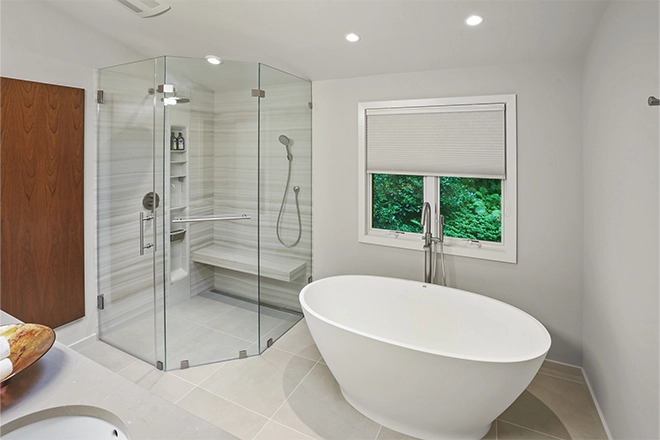
Yes, a bathroom remodel increases home value. A midrange bathroom remodel recoups approximately 80% of its cost at resale, according to the 2025 Cost vs. Value Report published by Zonda and the Journal of Light Construction. That 80% figure is the highest return for any interior remodeling project tracked in the report, and it represents the strongest bathroom ROI since 2007. Whether you are planning to sell your home soon or simply want to protect your investment, a bathroom remodel is one of the most reliable ways to add measurable value to your property. Below, we cover exactly how much value different types of bathroom remodels add, which upgrades deliver the strongest returns, how bathroom ROI compares to kitchen remodels, and what to consider before starting your project.
How Much Does a Bathroom Remodel Increase Home Value?
A bathroom remodel increases home value by recouping between 42% and 80% of the project cost, depending on the scope and quality of materials used. The range exists because not all bathroom remodels are created equal. A midrange bathroom remodel, which replaces most surfaces and fixtures within the existing footprint, delivers the highest percentage return. An upscale bathroom remodel, which involves premium materials and layout changes, costs significantly more but returns a smaller percentage of the investment.
The 2025 Cost vs. Value Report from Zonda analyzed 119 U.S. markets and found that a midrange bathroom remodel costs an average of $26,138 nationally. That same remodel adds approximately $20,915 in resale value. The midrange ROI has climbed 6 percentage points from the prior year, signaling that buyers are placing increasing weight on updated, move-in-ready bathrooms. Buyers in competitive markets consistently rank bathrooms among the first spaces they evaluate during a showing, which explains why updated bathrooms generate more offers and faster sales.
Regional variation plays a significant role in bathroom remodel returns. Homeowners in the Pacific region, which includes Washington, Oregon, California, Hawaii, and Alaska, see the highest average midrange bathroom remodel ROI at 91%, according to the Journal of Light Construction. That means a $27,710 midrange remodel in Washington state recoups approximately $25,217 at resale. The New England region follows closely at 90.5%, while the East North Central and Mountain regions trail at 69% to 71%. The local real estate market, buyer expectations, and competition from new construction all influence how much value a home renovation adds in a specific area.
What Is the ROI on a Bathroom Remodel?
The ROI on a bathroom remodel depends on the type of project. The Journal of Light Construction tracks four categories of bathroom projects, and their 2025 national averages reveal a clear pattern: the more you spend, the lower your percentage return. Midrange remodels hit the sweet spot between cost and value recovery, while upscale remodels and additions return a smaller share of their higher price tags.
Project TypeAverage CostAverage Resale ValueROIMidrange Bathroom Remodel$26,138$20,91580%Universal Design (ADA) Remodel$42,183$25,81261%Midrange Bathroom Addition$60,645$32,34753%Upscale Bathroom Remodel$81,612$34,00042%
All figures above are national averages from the 2025 Cost vs. Value Report published by Zonda and the Journal of Light Construction.
The universal design category deserves attention here. Universal design bathroom remodels, which include features like curbless showers, wider doorways, grab bars, and accessible vanities, gained 12 ROI points in a single year to reach 61%. That jump is the largest single-year increase in the report's interior-projects category. The aging U.S. population drives this trend. A 2024 AARP survey found that 75% of adults aged 50 and older want to remain in their current home as they age, and accessibility features make that possible while also broadening the pool of future buyers.
Minor cosmetic bathroom updates sit outside the formal Cost vs. Value tiers, but they deliver strong returns on a per-dollar basis. Zillow research shows that minor cosmetic bathroom changes yield $1.71 in home value for every $1 spent. Painting walls, swapping outdated fixtures for modern brushed nickel or matte black hardware, replacing a scratched mirror, and recaulking tile seams are low-cost changes that create an outsized visual impact for buyers walking through the space.
Does a Bathroom Remodel Add More Value Than a Kitchen Remodel?
A bathroom remodel adds comparable value to a kitchen remodel, and the two projects consistently rank as the top interior renovations for ROI. The 2025 Cost vs. Value Report shows that a minor kitchen remodel returns approximately 96% of its cost, while a midrange bathroom remodel returns 80%. On percentage alone, a minor kitchen remodel edges ahead. However, the comparison is more nuanced than a single number suggests.
A minor kitchen remodel costs less than a full kitchen overhaul, focusing on cosmetic updates rather than structural changes. A midrange bathroom remodel sits in a similar cost range. What separates the two is scope and disruption. Kitchen remodels affect daily routines more dramatically because the kitchen is a shared social and functional space. Bathroom remodels are typically contained to a smaller footprint and cause less household disruption during construction.
The NAR and NARI 2025 Remodeling Impact Report found that bathroom renovations have seen a 35% increase in demand over the past two years, making bathrooms the third most in-demand remodeling project behind kitchen upgrades (48% increase) and new roofing (43% increase). This rising demand reflects what we see across our project portfolio: homeowners are prioritizing the spaces that buyers evaluate most critically during a showing. Both kitchens and bathrooms matter, but a bathroom remodel often provides the most accessible entry point for homeowners who want to add value without a major renovation budget.
What Bathroom Upgrades Add the Most Value?
The bathroom upgrades that add the most value are functional improvements that appeal to the widest range of buyers. Highly personalized luxury features may look stunning, but they often return less at resale than simpler, broadly appealing updates. The upgrades below are ranked by their impact on buyer interest and resale value based on industry data and what we see in practice.
- Walk-in shower conversion. Converting a tub-shower combination into a dedicated walk-in shower is the single most impactful upgrade for primary bathrooms. The National Kitchen and Bath Association reports that shower-to-tub conversions remain the most common bathroom upgrade in 2025 and 2026. A frameless glass enclosure, rain showerhead, and built-in niche create a modern, spa-like appearance that buyers consistently value. One important detail: keep at least one bathtub somewhere in the home. Removing every tub can reduce appeal for families with young children.
- Updated vanity and countertop. A new vanity with a quartz or solid-surface countertop, modern faucet, and adequate storage makes an immediate visual impression. Double vanities in primary bathrooms carry extra value for households where two people share the space. Vanity upgrades are one of the most cost-effective changes because they anchor the entire room's appearance.
- Modern fixtures and hardware. Swapping brass or chrome fixtures from the 1990s for brushed nickel, matte black, or satin gold hardware modernizes the bathroom instantly. New faucets, showerheads, towel bars, and cabinet pulls fall into the minor cosmetic category, where every dollar spent returns $1.71 in home value according to Zillow research.
- Flooring replacement. Replacing old vinyl or cracked ceramic with porcelain tile or luxury vinyl plank (LVP) creates a clean, durable surface that buyers notice. Porcelain tile resists moisture better than most alternatives, and LVP offers a budget-friendly option that mimics the look of natural stone or wood.
- Improved lighting. Layered lighting that combines ambient ceiling fixtures, vanity task lighting, and optional accent lighting transforms the feel of a bathroom. Dimmer switches add a perceived luxury at minimal cost. According to the 2026 Houzz & Home Study, lighting upgrades are among the most frequently completed bathroom improvements.
- Ventilation and moisture control. A quiet exhaust fan rated at 110 CFM or higher prevents mold and mildew buildup. Mold is one of the most common issues that surfaces on home inspections, and buyers view mold as a serious red flag. Installing proper ventilation is a protective upgrade that pays off both in daily comfort and at resale.
Every upgrade above falls within the midrange remodel category. Luxury features like heated floors, smart toilets, and custom steam showers do add appeal in high-end markets, but their percentage ROI drops significantly because the additional cost outpaces what most buyers will pay back. We recommend focusing your project gallery review on midrange finishes that balance quality with broad buyer appeal.
Is $10,000 Enough for a Bathroom Remodel?
Yes, $10,000 is enough for a bathroom remodel focused on cosmetic and fixture upgrades within the existing layout. A $10,000 budget will not cover a full gut renovation or structural changes, but it can fund the highest-ROI improvements that most strongly influence how buyers perceive the space.
What Does a $10,000 Bathroom Remodel Look Like?
A $10,000 bathroom remodel looks like a freshly updated space with modern finishes that function well and photograph cleanly for listings. At this budget level, homeowners typically accomplish a new vanity with a solid-surface or quartz countertop, a modern faucet, an updated mirror or medicine cabinet, new lighting fixtures, fresh paint, updated hardware throughout, and either new flooring or a professionally refinished bathtub. Some homeowners at this price point also replace the toilet with a comfort-height, water-saving model.
The key to maximizing a $10,000 bathroom remodel is keeping the existing plumbing layout intact. Moving plumbing lines for a toilet, shower, or sink adds thousands of dollars in labor and materials. Staying within the existing footprint allows the budget to stretch further into visible finish upgrades that buyers actually notice. A 2026 homeowner survey conducted by This Old House found that nearly 95% of homeowners who completed a bathroom renovation reported satisfaction with the results, even among those who worked within modest budgets.
Is It Worth Remodeling a Bathroom Before Selling?
Remodeling a bathroom before selling is worth the investment in most situations, especially when the existing bathroom shows visible wear, has functional problems, or looks significantly outdated compared to competing listings. Zillow's 2024 Consumer Housing Trends Report found that 29% of sellers make improvements to a bathroom before listing, making it the second most popular pre-listing renovation after interior painting.
The decision to remodel before selling comes down to three factors. First, the current condition of the bathroom matters most. Cracked tile, mold, water stains, peeling caulk, and outdated fixtures are problems that will surface during a buyer's home inspection. Sellers end up paying for these issues regardless, either by completing repairs before listing, negotiating a credit after a poor inspection report, or accepting a lower sale price. Addressing these issues proactively through a remodel puts the seller in a stronger negotiating position.
Second, the competition in your local market determines how much an updated bathroom influences offers. In areas with significant new construction near your listing price, a remodeled bathroom helps your home compete with brand-new builds. In markets with limited inventory, even minor cosmetic updates can set your home apart and generate faster offers.
Third, the overimprovement threshold protects sellers from spending more than the market will return. A practical guideline suggests spending no more than 30% of your home's current value on any single renovation. Going beyond that threshold in a modest neighborhood means sinking money into upgrades that buyers in that price range will not pay back. The comparable sales in your neighborhood set the ceiling for what buyers will offer, regardless of how stunning your bathroom looks.
Should I Remodel My Master Bathroom or Guest Bathroom First?
Remodeling the master bathroom first delivers the highest return because buyers evaluate the primary bathroom more critically than any other bathroom in the home. The primary bathroom is the space buyers picture themselves using every day, and an outdated or poorly maintained primary bath can reduce the perceived value of the entire home. The 2026 Houzz & Home Study reports that 23% of renovating homeowners tackled their primary bathroom in 2025, with median spend reaching $15,000, up from $13,000 the prior year.
Guest bathrooms and powder rooms are secondary priorities. If the primary bathroom is already in good condition, a guest bathroom refresh is a reasonable next step, particularly for homes that host frequently or have a layout where the guest bath is visible during showings. Guest bathroom median spend runs approximately $7,000, according to the same Houzz study, making it a more accessible project for homeowners working within tighter budgets.
Is Adding a Bathroom or Remodeling One Better for Home Value?
Remodeling an existing bathroom is better for home value on a percentage-return basis. A midrange bathroom remodel returns 80% of its cost, while a midrange bathroom addition returns 53%, according to the 2025 Cost vs. Value Report. The remodel costs less ($26,138 vs. $60,645 for an addition), disrupts the household less, and recovers a higher share of the investment at sale.
Adding a bathroom is the better choice in one specific scenario: when the home has only one bathroom or when the bedroom-to-bathroom ratio is significantly imbalanced. Buyers expect at least two bathrooms in most markets, and a home with a single bathroom sits at a competitive disadvantage. Adding a full bathroom can increase a home's value by up to 20%, depending on the quality of finishes and the local market, according to industry data compiled by Badeloft. A half bathroom addition adds approximately 10% to home value. These percentage increases reflect the added functionality, not just the added finishes.
For homeowners considering whether to add or remodel, the deciding factor is what the home currently lacks. A home with two or more bathrooms benefits more from remodeling the existing spaces to current standards. A home with a single bathroom benefits more from an home addition that addresses a fundamental functionality gap. In Central Washington, we see both scenarios regularly, and the right choice depends on the home's existing layout and the expectations of local buyers.
Does an Outdated Bathroom Hurt Home Value?
An outdated bathroom hurts home value by reducing buyer interest, lowering offer prices, and creating inspection complications that delay or derail sales. An outdated bathroom signals deferred maintenance to buyers, and deferred maintenance is one of the most common reasons buyers either walk away or negotiate steep price reductions.
Specific conditions that hurt value include cracked or missing grout, chipped or stained fixtures, water damage around the tub or shower, visible mold or mildew, brass or gold-tone hardware from previous decades, dated wallpaper, and old vinyl flooring that is peeling or discolored. These problems are cosmetic on the surface, but many of them, particularly water damage and mold, point to deeper structural concerns that trigger alarm during a professional home inspection.
The NAR's 2025 Remodeling Impact Report found that 64% of homeowners feel a stronger desire to be at home after completing a remodel. The same emotional effect works in reverse: buyers who walk into an outdated bathroom feel less connected to the home. That emotional response translates directly into lower offers. Homes with updated bathrooms photograph better for online listings, generate more showings, and give buyers confidence that the home has been well maintained. A full home remodel is not always necessary to achieve this effect; targeted bathroom updates often address the most visible concern buyers have.
What Raises Property Value the Most?
The home improvement projects that raise property value the most combine broad buyer appeal with strong cost-to-return ratios. The 2025 Cost vs. Value Report reveals that exterior curb appeal projects dominate the top of the ROI rankings, followed by kitchen and bathroom updates as the highest-performing interior improvements.
- Garage door replacement: 268% ROI, the highest-performing project in the report for the second consecutive year, costing under $5,000 and adding over $12,500 in resale value (Zonda, 2025 Cost vs. Value Report).
- Manufactured stone veneer: Over 150% ROI. Exterior stone accents create immediate visual impact at a relatively low cost.
- Steel entry door replacement: 100% cost recovery per the NAR 2025 Remodeling Impact Report, making it one of the only projects that fully pays for itself.
- Siding replacement: Siding installation protects the home's exterior envelope while dramatically improving curb appeal. Fiber cement and LP SmartSide options provide durable, low-maintenance finishes that buyers value.
- Minor kitchen remodel: 96% ROI for cosmetic kitchen updates within the existing layout.
- Midrange bathroom remodel: 80% ROI, the strongest interior-only project ROI in the report.
- Deck or outdoor living spaces: Wood and composite decks return 60-80% of cost while expanding livable square footage.
Americans spent approximately $603 billion on home remodeling projects in 2024, according to the NAR and NARI's joint Remodeling Impact Report. The Harvard Joint Center for Housing Studies projects U.S. homeowner spending on improvements to reach $522 billion by the end of 2026. Within that spending, bathroom and kitchen remodels remain the most frequently completed interior projects. The data consistently shows that targeted, midrange improvements outperform luxury-level spending on percentage return. The goal is to match the renovation scope to the neighborhood's comp ceiling, not to exceed it.
How Much Does a Midrange Bathroom Remodel Cost?
A midrange bathroom remodel costs an average of $26,138 nationally, according to the 2025 Cost vs. Value Report. The 2026 Houzz & Home Study reports that the median primary bathroom renovation spend climbed to $15,000 in 2025, up 15.4% from $13,000 the prior year. Major remodels in large bathrooms of 100 square feet or more hold steady at a median of $25,000, while major remodels in smaller bathrooms reached $17,000, a 13% year-over-year increase.
A midrange bathroom remodel typically includes replacing the vanity with a solid-surface or quartz countertop, installing a new toilet, converting a tub to a walk-in shower or updating the tub/shower surround, laying ceramic or porcelain tile flooring, adding a recessed medicine cabinet, updating all lighting fixtures, and replacing hardware and accessories throughout. The finishes are durable and attractive without reaching into luxury-grade pricing. Materials like ceramic tile, chrome or brushed nickel fixtures, and quartz countertops fall squarely within midrange specifications.
Labor represents a significant share of remodeling costs in any bathroom project. The 2025 Houzz Bathroom Trends Study found that 84% of bathroom renovators hire professional contractors, and for good reason. Plumbing, electrical, waterproofing, and tile work all require skilled execution to avoid problems that surface on inspection.
A 2026 survey found that nearly 1 in 3 homeowners reported their bathroom remodel costing more than expected, often because of plumbing upgrades, hidden water damage, or structural repairs uncovered during demolition. Hiring experienced professionals reduces the risk of costly errors and protects the value the bathroom renovation adds.
Half of all U.S. homeowners say they plan to renovate in 2026, according to the Houzz study. That level of demand means material costs and contractor availability both influence project timelines. Starting the planning process early, locking in material selections, and working with a contractor who provides transparent budgets helps homeowners avoid surprises. We assess every space before work begins, map out materials, set a realistic timeline, and provide an honest estimate so there are zero surprises from start to finish.
Frequently Asked Questions
What Really Adds Value to a Home?
What really adds value to a home is any improvement that increases buyer appeal without exceeding the neighborhood's price ceiling. Kitchen and bathroom remodels, exterior curb appeal upgrades like siding materials, garage door replacements, and energy-efficient improvements consistently rank as the highest-value projects. The key is matching the scope and quality of the upgrade to what buyers in your local market expect and are willing to pay for.
Exterior improvements also rank among the strongest curb-appeal investments. Understanding the full cost of residing a house helps homeowners compare exterior and interior renovation returns side by side.
What Home Improvements Do Not Add Value?
Home improvements that do not add value include highly personalized design choices, swimming pool installations in most markets, converting bedrooms into non-bedroom spaces (home gyms, theaters), and luxury upgrades in modest neighborhoods. Over-improving beyond the comparable sales ceiling in your area means spending money that buyers will not return at sale. Projects that reduce bedroom count, remove functional space, or reflect niche tastes consistently hurt rather than help resale value.
What Devalues a House Most?
What devalues a house most is deferred maintenance combined with over-personalization. Structural problems, a failing roof, outdated electrical panels, aging HVAC systems, and water damage are the conditions that generate the largest price reductions and inspection failures. Visibly amateur DIY work, bold design choices that limit buyer appeal, and unpermitted renovations also reduce value. Buyers can overlook cosmetic preferences, but they cannot overlook systems that need replacement or work that was done without proper permits.
How Long Does a Bathroom Remodel Take?
A bathroom remodel takes 3 to 6 weeks for most midrange projects, depending on the scope, the size of the bathroom, material availability, and whether the project uncovers hidden damage that requires additional repair. A cosmetic refresh with fixture and hardware swaps can be completed in 1 to 2 weeks. A full gut renovation with layout changes, plumbing relocation, and custom tile work may extend to 8 weeks or longer. Clear planning before demolition begins is the most effective way to keep timelines on track.
How Much Does a Master Bathroom Remodel Increase Home Value?
A master bathroom remodel increases home value by recouping 80% of its cost for midrange projects, with the Pacific region averaging 91% ROI. Beyond the percentage return, a remodeled primary bathroom can increase the overall perceived value of the home by 4% to 7%, according to industry data compiled by Moreno Bath. Primary bathrooms carry more weight than guest bathrooms in buyer evaluations because they represent the space buyers will use most frequently. Investing in the primary bathroom first delivers the highest combined financial and emotional return.
Putting It All Together
A bathroom remodel is one of the strongest investments a homeowner can make, whether the goal is to sell soon or to enjoy an updated space for years to come. Midrange remodels deliver the highest ROI of any interior project at 80%, and minor cosmetic updates return $1.71 for every $1 spent. The data is clear: updated bathrooms attract more buyers, generate stronger offers, and help homes sell faster. The upgrades that matter most, walk-in showers, modern vanities, updated lighting, and neutral finishes, are achievable across a wide range of budgets.
At AZ Builders LLC, we bring the same precision and care to every renovation project, whether it is a targeted bathroom refresh or a complete home transformation. If you are thinking about a bathroom remodel and want to understand what is possible for your home and your budget, reach out to our team for a conversation. We will listen to your vision, assess your space, and provide an honest estimate with zero surprises.
.webp)

.webp)
.webp)
You May Also Like

.webp)

%201.webp)
%202.webp)
%203.webp)
.webp)


.avif)