
.webp)


How Long Does a Kitchen Remodel Take?
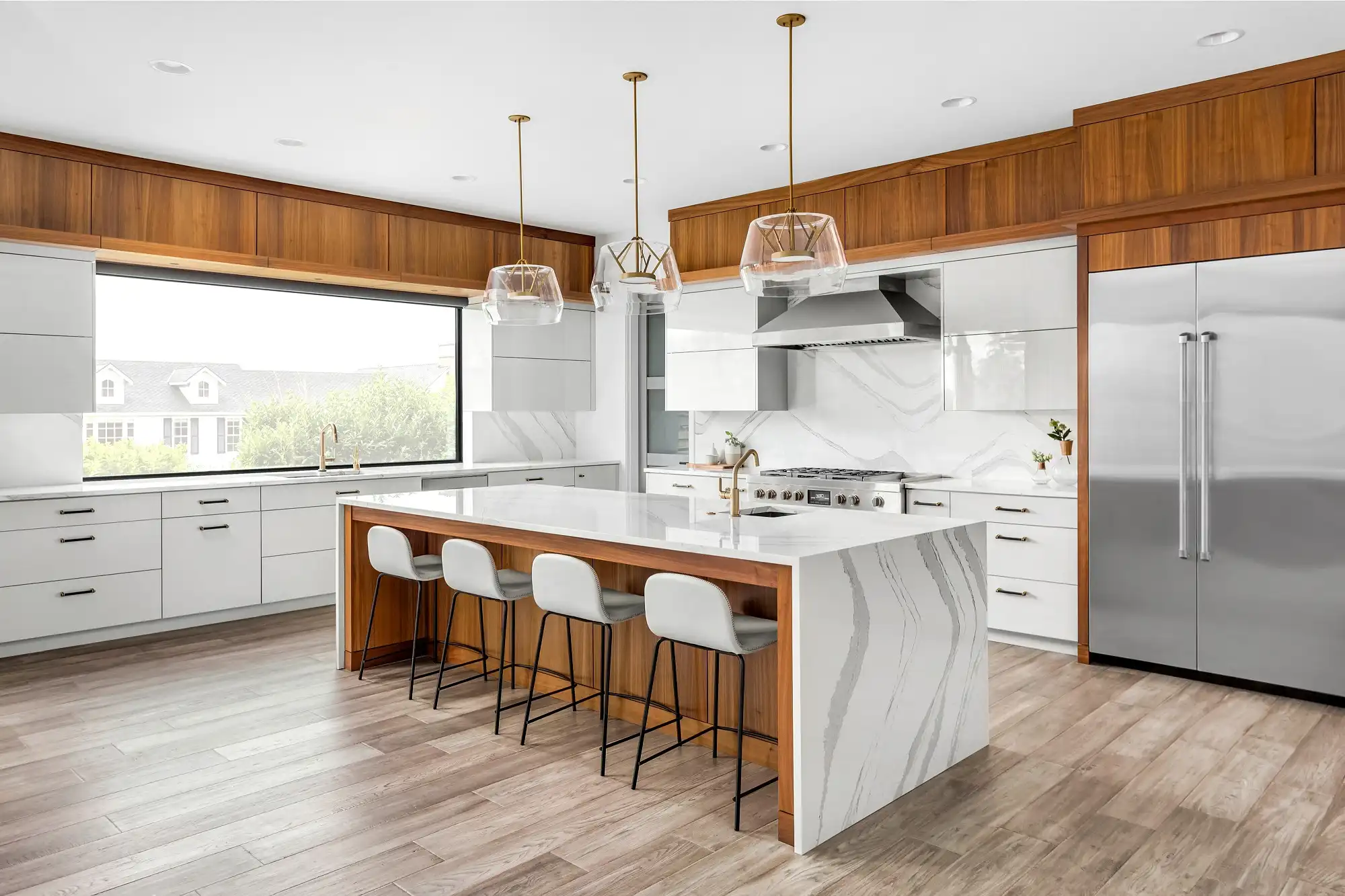
A kitchen remodel takes 3 to 6 months from the initial design consultation through the final walkthrough, with active construction lasting 6 to 12 weeks once all materials arrive on site. A cosmetic refresh with new paint, hardware, and light fixtures can finish in 1 to 4 weeks. A mid-range remodel with new cabinets, countertops, and flooring takes 8 to 12 weeks. A full gut renovation that changes the layout, moves plumbing and electrical lines, and uses custom materials can stretch to 4 to 6 months of construction alone. The single biggest factor that controls the timeline is material lead time, specifically how long the cabinets take to arrive, because almost every other phase of construction depends on the cabinets being installed first.
How Long Does a Kitchen Remodel Take by Scope?
A kitchen remodel takes 1 to 4 weeks for a cosmetic update, 8 to 12 weeks for a mid-range renovation, 4 to 6 months for a full gut renovation, and 6 to 12 months for a custom luxury build with imported or specialty materials. The scope of work is the primary driver of the timeline.
Cosmetic updates keep the existing layout, cabinets, and plumbing in place. The work focuses on painting cabinet doors, replacing hardware, upgrading light fixtures, adding a new backsplash, and swapping out faucets. No permits are needed because no structural, plumbing, or electrical systems change. A cosmetic refresh is the fastest path to a noticeably different kitchen.
Mid-range remodels replace all visible surfaces and fixtures while keeping the existing footprint. New cabinets, countertops, flooring, appliances, and a backsplash go in, but the sink, stove, and refrigerator stay in their current positions. This level of work is the most common scope homeowners choose for full home remodels that include the kitchen, because it produces the biggest transformation without the cost and timeline of moving plumbing and electrical lines.
Full gut renovations remove everything down to the studs, change the layout, relocate plumbing and electrical, and rebuild the kitchen from scratch. Permits, inspections, and custom material lead times all extend the schedule. A full gut renovation is the longest and most expensive path, but it is the only option when the existing layout does not work for the homeowner's needs.
How Long Does a Small Kitchen Remodel Take?
A small kitchen remodel takes 1 to 6 weeks depending on whether the work is purely cosmetic or involves replacing cabinets and countertops in a compact space.
A cosmetic refresh of a small kitchen (under 100 square feet) finishes in 1 to 2 weeks. Painting cabinets, replacing hardware, installing a new faucet, and adding a peel-and-stick backsplash are tasks that a homeowner or a small crew can complete quickly because the room is small and no permits or trade work is involved.
A small kitchen renovation with new stock cabinets, laminate countertops, and updated flooring takes 4 to 6 weeks. Stock cabinets arrive in 2 to 4 weeks, eliminating the 8-to-12-week wait that custom cabinets impose. The installation itself moves fast in a small kitchen because there are fewer cabinets to hang, less countertop to template and fabricate, and less flooring to lay. The shorter timeline and lower material quantities also reduce the overall cost, which connects directly to how homeowners evaluate their remodeling costs when deciding how far to go with a project.
How Long Does a Full Kitchen Remodel Take?
A full kitchen remodel takes 4 to 6 months of active work, not including the 1-to-3-month planning and design phase that precedes construction. The total timeline from first design meeting to final walkthrough ranges from 5 to 8 months for most full-scale kitchen renovations.
The extended timeline reflects the complexity of the work. A full remodel involves demolition, structural modifications, plumbing relocation, electrical rewiring, new drywall, cabinet installation, countertop fabrication, flooring, backsplash, appliance installation, and painting. Each phase depends on the previous one being complete. Cabinets cannot go in until the walls are finished. Countertops cannot be templated until the cabinets are installed. The backsplash cannot go in until the countertops are set. This sequential dependency is what makes a kitchen remodel take longer than a bathroom remodel of similar budget, where fewer sequential steps are involved.
Custom materials extend the timeline further. The 2025 Houzz Kitchen Trends Study identifies custom cabinetry as the single most common source of material delays in kitchen renovations. Custom cabinets take 8 to 12 weeks to fabricate, and that lead time is a fixed production window that no amount of urgency can shorten. We schedule complete interior transformations around cabinet delivery dates because starting demolition before cabinets have a confirmed arrival creates a situation where the homeowner lives in a gutted kitchen for weeks longer than necessary.
What Is the Order of a Kitchen Remodel?
The order of a kitchen remodel follows a specific sequence where each phase must be completed before the next one can begin: planning, material ordering, demolition, rough-in plumbing and electrical, inspections, drywall, cabinets, countertops, flooring, backsplash, appliances, and final touches.
- Planning and design (1-3 months): Measure the space, finalize the layout, select all materials and finishes, hire a contractor, and submit permit applications. Every material selection must be locked in before demolition starts.
- Material ordering (1-2 months, overlaps with planning): Order cabinets, countertop material, appliances, flooring, backsplash tile, lighting, and plumbing fixtures. Confirm delivery dates for every item before scheduling demolition.
- Demolition (1-3 days): Remove existing cabinets, countertops, flooring, appliances, and backsplash. Inspect the exposed walls, subfloor, and framing for hidden damage.
- Rough-in plumbing and electrical (1-2 weeks): Licensed plumbers and electricians install or relocate water supply lines, drain pipes, gas lines, circuits, outlets, and switch boxes to match the new layout.
- Inspections (1-7 days): A municipal building inspector verifies that all rough-in work meets code before walls are closed up. Failed inspections require corrections and re-inspection.
- Drywall and painting (1-2 weeks): Hang, tape, mud, sand, prime, and paint new drywall. This closes the walls and prepares the surfaces for cabinet installation.
- Cabinet installation (3-5 days): Install upper and lower cabinets, verify level and plumb, and secure to wall studs.
- Countertop templating, fabrication, and installation (1-3 weeks): A fabricator measures the installed cabinets, cuts the countertop material to fit, and installs the finished countertop. Stone countertops require the most fabrication time.
- Flooring installation (2-5 days): Install tile, hardwood, luxury vinyl plank, or other flooring material. Some contractors install flooring before cabinets; others install after. The sequence depends on the flooring material and the contractor's preference.
- Backsplash installation (2-4 days): Set tile or other backsplash material between the countertop and upper cabinets. Grouting and sealing add an additional day.
- Appliance installation and hookup (1-2 days): Install the range, refrigerator, dishwasher, microwave, and any other built-in appliances. Connect gas, water, and electrical lines.
- Final touches and punch list (3-7 days): Install cabinet hardware, trim, light fixtures, outlet covers, and under-cabinet lighting. Complete a walkthrough with the homeowner to identify any remaining items.
This sequence applies to home renovations of every scale. Skipping steps or working out of order creates rework, delays, and added cost at every stage that follows.
How Long Does Demolition Take in a Kitchen Remodel?
Demolition takes 1 to 3 days in a standard kitchen remodel, covering the removal of existing cabinets, countertops, backsplash, flooring, and appliances. A small kitchen with simple materials demolishes in a single day. A large kitchen with tile flooring, stone countertops, and built-in cabinetry takes 2 to 3 days.
The real variable in the demolition phase is not the removal itself but what the crew finds behind the walls after the old materials come out. Homes built before 1990 commonly reveal hidden water damage, outdated wiring, or deteriorated plumbing once the cabinets and drywall are removed, according to renovation data from Prestigious Custom Cabinets. Discovering mold, rot, or knob-and-tube wiring does not mean the project is over, but it does require immediate decisions about scope, budget, and timeline.
Budget a 10% to 20% contingency for these discoveries. A homeowner who sets aside contingency funds makes fast decisions when hidden damage appears. A homeowner who budgets to zero stalls the project while figuring out how to pay for the unexpected work. Examples of how we handle these discoveries during construction appear in our gallery of completed renovation projects.
How Long Do Kitchen Cabinets Take to Order?
Kitchen cabinets take 2 to 4 weeks for stock cabinets, 4 to 8 weeks for semi-custom cabinets, and 8 to 12 weeks or more for fully custom cabinets. Cabinet lead time is the single longest material wait in a kitchen remodel and the primary factor that determines when construction can begin.
Kitchen Remodel Timeline by Scope and Cabinet Type
Remodel ScopeCabinet TypeCabinet Lead TimeActive ConstructionTotal TimelineCosmetic RefreshExisting (paint/reface)None1 to 4 weeks1 to 4 weeksMinor RenovationStock2 to 4 weeks4 to 6 weeks6 to 10 weeksMid-Range RemodelSemi-Custom4 to 8 weeks8 to 12 weeks3 to 5 monthsFull Gut RenovationCustom8 to 12+ weeks10 to 16 weeks5 to 8 monthsLuxury / Custom BuildFully Custom / Imported12 to 20 weeks12 to 24 weeks6 to 12 months
Sources: 2025 Houzz Kitchen Trends Study; Kitchen Cabinet Guys 2026 timeline guide; DwellifyHome renovation timeline analysis; KitchenwareSets 2026 remodel data.
The 2025 Houzz Kitchen Trends Study confirms that custom cabinetry is the most common source of material delays in kitchen renovations. Homeowners who choose stock or semi-custom cabinets shorten the overall timeline by 4 to 8 weeks compared to fully custom orders. The trade-off is fewer finish options, standard sizes instead of custom dimensions, and less flexibility in door style and color selection. Material and cost comparisons between different finishes follow similar logic to decisions homeowners make when choosing between exterior cladding options, where lead time, cost, and durability all factor into the choice.
How Long Does It Take to Remove and Replace a Kitchen?
It takes 8 to 12 weeks of active construction to remove and replace a kitchen, starting from demolition day through the final walkthrough, assuming all materials are on site before demolition begins.
The 8-to-12-week window covers demolition (1-3 days), rough-in plumbing and electrical (1-2 weeks), inspections (1-7 days), drywall (1-2 weeks), cabinet installation (3-5 days), countertop fabrication and installation (1-3 weeks), flooring (2-5 days), backsplash (2-4 days), appliance hookup (1-2 days), and punch list (3-7 days). Each phase runs sequentially, with minimal overlap possible.
The 8-week end of the range applies to kitchens where the layout stays the same, stock or semi-custom cabinets are used, and no hidden damage is discovered during demolition. The 12-week end applies to kitchens with layout changes, stone countertops that require templating after cabinet installation, and at least one discovery behind the walls that adds scope. Many homeowners combine a kitchen remodel with other improvements to outdoor living spaces or adjacent rooms, which can run in parallel with the kitchen work to make efficient use of the contractor's time on site.
What Causes Kitchen Remodel Delays?
The most common causes of kitchen remodel delays are mid-project design changes, backordered materials, slow permit approvals, hidden damage behind walls, and contractor scheduling conflicts between trades.
- Mid-project design changes: Changing a cabinet color or countertop material after the order has been placed can add 8 to 12 weeks to the timeline, according to Horizon Kitchen and Bath's 2026 project data. This is the number one cause of delays and the most preventable. Locking in every selection before demolition starts eliminates this risk entirely.
- Backordered materials: Supply chain disruptions continue to affect the remodeling industry in 2026. Specialty tile, high-end appliances, and imported materials carry the highest backorder risk. Having a backup selection for each material prevents a single backorder from stalling the entire project.
- Permit and inspection delays: Some municipalities schedule inspections within 24 hours. Others take up to a week. The permit review period varies from 1 to 4 weeks depending on the complexity of the project and the workload of the local building department.
- Hidden damage: Water damage, mold, outdated wiring, and deteriorated plumbing are common discoveries in kitchens of homes built before 1990. These issues require immediate remediation before the remodel can continue.
- Trade scheduling conflicts: A general contractor coordinates plumbers, electricians, drywall installers, tile setters, and countertop fabricators. If one trade runs behind on another job, the kitchen project stalls until that trade becomes available.
Every one of these delays is either preventable or manageable with proper planning. The same project management discipline that keeps siding and exterior projects on track applies equally to kitchen remodels: plan early, order early, decide early, and build a schedule with buffer days for the unexpected.
Can You Live in Your House During a Kitchen Remodel?
Yes, you can live in your house during a kitchen remodel by setting up a temporary kitchen in another room with a microwave, mini-refrigerator, portable cooktop, and access to a bathroom sink or utility sink for washing dishes.
Most homeowners find a temporary kitchen manageable for 6 to 8 weeks, according to Horizon Kitchen and Bath. Longer projects require more planning. A temporary kitchen works best in a dining room, living room, or garage where a folding table, a power strip, and a small countertop appliance station provide enough function to prepare simple meals.
The biggest disruption during a kitchen remodel is not the cooking limitation but the dust, noise, and lack of access to the room. Demolition and drywall work produce the most dust. A good contractor seals off the kitchen from the rest of the house with plastic sheeting and runs a negative-air fan to pull dust out of the work area. Rough-in plumbing and electrical work produces the most noise. Cabinet and countertop installation is quieter but restricts access to the room for days at a time.
Families with young children, elderly members, or anyone with respiratory sensitivities should plan for temporary relocation during the demolition and drywall phases (1-3 weeks total). The rest of the remodel is livable with reasonable tolerance for construction activity. Homeowners who plan larger projects like home additions alongside a kitchen remodel sometimes use the new addition as temporary living space while the kitchen work completes.
What Is the Best Time of Year to Remodel a Kitchen?
The best time of year to remodel a kitchen is during the off-season months of November through March, when contractor demand drops, scheduling is more flexible, and labor costs can be 10% to 20% lower than peak-season rates.
The contractor busy season runs April through October in most markets. During those months, the best crews book 4 to 8 weeks in advance, and material suppliers operate at peak volume with longer processing times. Central Washington follows this same pattern: spring and summer are the busiest seasons for both interior and exterior construction, while late fall and winter open up schedules.
The trade-off with off-season remodeling is that cold temperatures can affect delivery logistics and make exterior-related work (like running a new gas line from an exterior meter) slower. Interior kitchen work, however, is fully insulated from weather conditions. Demolition, rough-in, cabinet installation, and finishing all happen inside the home regardless of the temperature outside.
Seasonal timing decisions apply to every type of renovation project. The same factors that influence when to schedule exterior siding work, contractor availability, material lead times, and weather conditions, also shape the ideal window for a kitchen remodel.
Can You Remodel a Kitchen in Stages?
Yes, you can remodel a kitchen in stages by completing cosmetic updates first, replacing cabinets and countertops second, and tackling layout changes and plumbing modifications in a later phase.
Phased remodeling spreads the cost and disruption across multiple smaller projects instead of one large one. Phase one might include painting cabinets, replacing hardware, upgrading lighting, and installing a new backsplash for $3,000 to $8,000. Phase two replaces the cabinets, countertops, and sink for $10,000 to $20,000. Phase three moves plumbing, changes the layout, and installs new flooring for $15,000 to $30,000 or more.
The advantage of phasing is affordability and livability. Each phase takes 1 to 6 weeks, and the kitchen remains partially functional between phases. The disadvantage is that the total cost is typically 15% to 25% higher than doing everything at once because each phase requires its own mobilization, cleanup, and potential rework on connections between old and new materials. For homeowners who want the full transformation done in a single pass, a full-scale renovation delivers the complete result without the per-phase overhead.
Frequently Asked Questions
How Long Does It Take to Install Kitchen Cabinets?
It takes 3 to 5 days to install a full set of kitchen cabinets in an average-sized kitchen. Upper cabinets go in first because wall access is easier without lower cabinets in the way. Lower cabinets follow. Each cabinet is leveled, shimmed, and screwed into wall studs. Crown molding, filler strips, and end panels add 1 to 2 additional days. A small kitchen with 15 to 20 cabinets installs in 2 to 3 days. A large kitchen with 30 or more cabinets takes 4 to 5 days.
How Long Does a Kitchen Countertop Take to Install?
A kitchen countertop takes 1 to 3 weeks from templating to installation. The fabricator measures the installed cabinets (1 day), fabricates the countertop at their shop (5 to 14 days depending on material and shop workload), and installs the finished countertop (1 day). Laminate countertops fabricate fastest at 3 to 5 days. Granite and quartz take 7 to 14 days. Custom stone with complex edge profiles and cutouts takes the longest.
Do You Need a Permit for a Kitchen Remodel?
You need a permit for a kitchen remodel when the work involves moving or adding plumbing lines, installing or modifying electrical circuits, removing or altering walls, or changing the footprint of the room. Cosmetic updates like painting, replacing cabinets in the same location, and installing new appliances at existing connections do not typically require a permit. Permit review takes 1 to 4 weeks depending on the local building department.
How Long Does a Kitchen Remodel Take From Start to Finish?
A kitchen remodel takes 3 to 6 months from the first design meeting to the final walkthrough for a mid-range to full renovation. The planning phase takes 1 to 3 months. Material ordering takes 1 to 2 months (often overlapping with planning). Active construction takes 6 to 12 weeks. Cosmetic-only projects compress the total timeline to 1 to 4 weeks because they skip the planning, ordering, and permitting phases entirely.
How Much Does a Kitchen Remodel Cost?
A kitchen remodel costs $15,000 to $50,000 for a mid-range renovation and $50,000 to $100,000 or more for a full gut renovation with custom materials, according to national 2026 pricing data. The average kitchen remodel in the United States costs approximately $35,000. Kitchen renovations recoup 75% to 100% of their cost at resale depending on the scope and the local market, according to the 2025 Cost vs Value Report from the Journal of Light Construction.
How Long Does a Bathroom Remodel Take?
A bathroom remodel takes 1 to 2 weeks for a cosmetic refresh, 3 to 5 weeks for a mid-range renovation, and 6 to 12 weeks for a full gut renovation with layout changes. Bathroom remodels generally take less time than kitchen remodels because the room is smaller, the number of trades involved is fewer, and the sequential dependencies between phases are less complex. Both projects follow the same general sequence of demolition, rough-in, inspection, installation, and finishing.
Putting It All Together
A kitchen remodel runs on a predictable timeline when the planning happens early, the materials are ordered before demolition starts, and every design decision is locked in before the first cabinet comes off the wall. The biggest delays are preventable. Custom cabinets take 8 to 12 weeks no matter what, so planning around that lead time is the most effective thing a homeowner can do. Everything else, from demolition to the final coat of paint, follows a phase-by-phase sequence where each step takes days, not months, when the materials are ready and the trades are scheduled.
At AZ Builders LLC, we manage kitchen remodels and whole-home renovations with the same planning discipline: every material ordered, every trade scheduled, every timeline communicated before the work begins. If you are ready to start planning your kitchen remodel, call us at (509) 661-2919 for a free consultation.
.webp)

.webp)
.webp)
You May Also Like

.webp)

%201.webp)
%202.webp)
%203.webp)
.webp)


.avif)