.webp)


What Is Fiber Cement Siding?What Is Fiber Cement Siding?
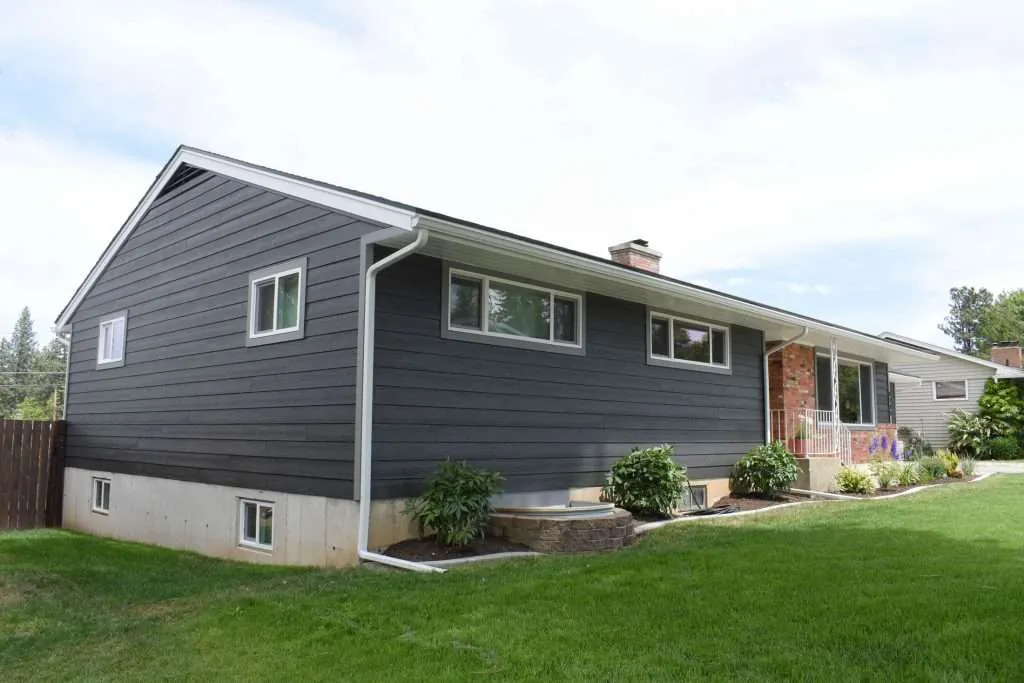
Fiber cement siding is a durable exterior cladding material made from a mixture of Portland cement, sand, and cellulose fibers that resists fire, moisture, insects, and rot while replicating the appearance of natural wood. Fiber cement lasts 30 to 50 years with proper installation and maintenance, carries a Class A fire rating (the highest available for exterior cladding), and can be painted any color. The material was introduced in the 1980s as a safer replacement for asbestos cement siding, and it has become the fastest-growing siding segment in U.S. new construction, according to 2026 industry data. This guide covers what fiber cement siding is made of, how long it lasts, how it compares to vinyl and wood, what it costs, and how it is installed.
What Is Fiber Cement Siding Made Of?
Fiber cement siding is made of three primary ingredients: Portland cement (the binding agent), silica sand (which provides hardness and density), and cellulose fibers (wood pulp that adds flexibility and tensile strength to the cured panel).
Portland cement gives fiber cement siding its fire resistance and structural rigidity. Silica sand adds mass and density, which is why fiber cement panels weigh approximately 2.5 pounds per square foot, roughly five times heavier than vinyl siding at 0.5 pounds per square foot. Cellulose fibers from recycled wood pulp reinforce the cement matrix and prevent cracking under stress, similar to how rebar reinforces poured concrete.
The manufacturing process mixes these three ingredients with water to form a slurry, which is then pressed into molds that create the desired profile: horizontal lap, shingle/shake, vertical board-and-batten, or flat panel. The molded panels cure under heat and pressure, producing a dense, dimensionally stable product that holds paint, resists impact, and withstands temperature extremes without the warping, buckling, or melting that affects lighter siding materials.
The original fiber cement products used asbestos fibers instead of cellulose. Asbestos was phased out in the 1980s due to well-documented health risks, and cellulose replaced it across all major manufacturers. Today, the three dominant fiber cement manufacturers in the United States are James Hardie, Nichiha, and Allura. We install fiber cement from multiple manufacturers as part of our siding specialist services, selecting the brand and profile that best fits each home's architecture and the homeowner's budget.
For a direct comparison of fiber cement against engineered wood alternatives, the differences in material composition, cost, and performance are covered in LP SmartSide vs fiber cement siding.
How Long Will Fiber Cement Siding Last?
Fiber cement siding lasts 30 to 50 years with proper installation and maintenance, and premium-grade products from manufacturers like James Hardie can reach 50 to 60 years of service life. This lifespan is roughly twice that of vinyl siding (20 to 40 years) and significantly longer than untreated wood siding (15 to 30 years without regular maintenance).
The longevity of fiber cement comes from its dimensional stability. Fiber cement's thermal expansion rate is one-sixth of vinyl's, according to Clear Home Projects' 2026 material analysis. That low expansion rate means fiber cement panels do not buckle, warp, or pull away from fasteners as temperatures swing from summer highs to winter lows. In Central Washington, where daily temperature swings of 40 to 50 degrees Fahrenheit are common during spring and fall, this dimensional stability prevents the seasonal movement that shortens the life of more flexible materials.
Installation quality is the single biggest factor in how long fiber cement actually lasts. Improper nailing, inadequate flashing around windows and doors, and missing kick-out flashing where rooflines meet walls all allow moisture behind the panels. Moisture behind fiber cement causes the cellulose fibers to swell, which leads to cracking, delamination, and eventual panel failure years before the material's rated lifespan. Homeowners evaluating what it takes to reside a house should weigh installation quality as heavily as material choice, because a premium product installed poorly will fail before a standard product installed correctly.
Is Fiber Cement Siding Fireproof?
Fiber cement siding is classified as noncombustible under ASTM E136 testing standards and carries a Class A fire rating, the highest fire-resistance rating available for exterior cladding materials. Fiber cement does not ignite, does not contribute fuel to a fire, and does not produce toxic fumes when exposed to flame.
The Class A fire rating means fiber cement siding withstands direct flame exposure without burning, melting, or deforming. Vinyl siding, by contrast, melts at approximately 165 degrees Fahrenheit and can ignite at higher temperatures. Wood siding is combustible without fire-retardant treatment. Metal siding does not burn but conducts heat rapidly to the structure behind it. Fiber cement is the only common residential siding material that is both noncombustible and a poor heat conductor.
In fire-prone regions and wildland-urban interface (WUI) zones, local building codes increasingly require noncombustible exterior cladding. Fiber cement satisfies these requirements without additional fire-retardant treatment. The fire performance of fiber cement is one of the reasons it has become the fastest-growing siding segment in new construction across the western United States.
Does Fiber Cement Siding Lower Home Insurance?
Yes, fiber cement siding can lower home insurance premiums because its Class A fire rating and noncombustible classification reduce the fire risk that insurers assess when pricing a homeowner's policy. The discount varies by insurer and location, but homeowners in fire-prone areas report savings of 5% to 15% on their annual premium after switching from wood or vinyl to fiber cement.
Insurance companies calculate premiums based on the materials that make up a home's exterior envelope. A noncombustible roof combined with noncombustible siding places the home in a lower risk category than a home with combustible cladding. The savings compound over fiber cement's 30-to-50-year lifespan, adding thousands of dollars in cumulative premium reductions that partially offset the higher upfront installation cost.
Homeowners should contact their insurance provider before and after a siding project to confirm the available discount. Some insurers require documentation of the siding material and installation to apply the lower rate. The insurance benefit is one of several factors that make fiber cement a strong investment for home renovations focused on long-term value and protection.
Which Is Better, Vinyl or Fiber Cement Siding?
Fiber cement siding is better than vinyl for homeowners who prioritize durability, fire resistance, curb appeal, and long-term value, while vinyl siding is better for homeowners who prioritize low upfront cost and zero-maintenance exterior care. The right choice depends on the homeowner's budget, timeline for staying in the home, and performance priorities.
Fiber Cement vs Vinyl Siding Comparison
CategoryFiber CementVinylCost (installed, 2,000 sq ft home)$16,000 to $28,000$8,000 to $16,000Material cost per sq ft$5 to $10$3 to $7Lifespan30 to 50 years20 to 40 yearsFire ratingClass A, noncombustibleMelts at 165°FROI at resale77% to 114%74% to 97%Annual cost of ownership$300 to $450$300 to $550MaintenanceRepaint every 10 to 15 yearsRinse with hose; no paintingWeight per sq ft2.5 lbs0.5 lbsThermal expansionVery low (1/6 of vinyl)High (up to 1/2 inch per 12 ft panel)
Sources: 2025 Cost vs Value Report (Journal of Light Construction); SidingCostEstimate 2026; Clear Home Projects 2026 lifecycle analysis; Everlasting Construction 2026 pricing data.
Homeowners who plan to stay in their home for 15 or more years typically break even on fiber cement's higher upfront cost around year 12 to 15, when the lifecycle cost advantage kicks in through avoided replacement and lower annual maintenance. Homeowners planning to sell within 10 years often get better dollar-for-dollar returns from vinyl because the lower installation cost keeps more cash in hand while still delivering a 74% to 97% resale return.
We install both vinyl and fiber cement siding and help homeowners evaluate which material fits their priorities. Our professional siding installation process includes a detailed material recommendation based on each home's architecture, exposure, and the homeowner's budget.
How Much Does Fiber Cement Siding Cost for a 2,000 Sq Ft House?
Fiber cement siding costs $16,000 to $28,000 for a typical 2,000-square-foot home, including materials, labor, trim, and removal of existing siding. The average fiber cement installation costs $14,891 nationally, according to Angi's 2026 cost data.
Material costs account for $5 to $10 per square foot depending on the brand, profile, and finish. James Hardie's ColorPlus pre-finished line costs more than field-primed panels but eliminates the need for immediate on-site painting and carries a 15-year finish warranty. Labor costs run 30% to 50% higher than vinyl installations because fiber cement's weight (2.5 lbs per sq ft) requires specialized cutting tools with diamond-tipped blades, OSHA-compliant silica dust control measures, and additional crew members to handle the heavy panels safely.
Trim, soffit, fascia, and window casing add $1,500 to $4,500 to the total depending on the home's perimeter and the number of windows and doors. Removal of existing siding adds $1,000 to $3,000. These accessory costs apply equally to any exterior renovation, from siding projects to full home remodels that include exterior upgrades alongside interior work.
What Siding Increases Home Value?
Fiber cement siding increases home value more than any other siding material, returning 77% to 114% of the project cost at resale, according to the 2025 Cost vs Value Report published by the Journal of Light Construction.
The 114% return means that in many markets, fiber cement siding replacement actually adds more to the home's resale value than the project costs to complete. This makes fiber cement one of the highest-ROI home improvements available in 2026. Vinyl siding returns 74% to 97%, which is still a strong return but falls below fiber cement in both percentage and absolute dollar terms on homes valued above $350,000.
Real estate data consistently shows that homes with fiber cement siding sell faster and command higher offers than comparable homes with vinyl, particularly in competitive markets where buyers compare multiple properties side by side. The premium appearance, visible quality, and perceived durability of fiber cement signal to buyers that the home has been maintained to a high standard. Completed siding projects demonstrating this curb appeal impact appear in our gallery of finished exterior work.
Can You Paint Fiber Cement Siding?
Yes, you can paint fiber cement siding any color using a high-quality 100% acrylic exterior paint, and the ability to choose any color is one of fiber cement's biggest advantages over vinyl, where color options are limited to the manufacturer's palette.
Fiber cement accepts paint exceptionally well because the cementite surface provides a porous, textured substrate that grips paint at the molecular level. A properly applied coat of 100% acrylic latex exterior paint lasts 10 to 15 years on fiber cement before repainting is needed. Factory-applied finishes like James Hardie's ColorPlus technology extend that interval to 15 or more years and include a manufacturer warranty against peeling, cracking, and chipping.
The color flexibility of fiber cement is especially valuable for homeowners who want to match a specific architectural style, coordinate with landscaping and hardscaping, or refresh the look of their home years after installation without replacing the siding. A professional repaint costs $1 to $3 per square foot, which runs $2,000 to $6,000 for a typical 2,000-square-foot home. That repaint cost is a fraction of the cost of replacing faded vinyl panels, and it extends the siding's appearance and protection for another decade. Fiber cement's paintability also complements outdoor living spaces projects where the home's exterior color needs to coordinate with new decks, patios, and pergola structures.
What Siding Has the Least Maintenance?
Vinyl siding has the least maintenance of any common residential siding material because it never needs painting, staining, or sealing, and it cleans with a garden hose and mild detergent. Fiber cement requires moderate maintenance (repainting every 10 to 15 years plus annual inspection). Wood siding requires the most maintenance (painting or staining every 5 to 7 years plus regular sealing and rot inspection).
The annual cost of ownership tells a more complete story than the maintenance schedule alone. Clear Home Projects' 2026 lifecycle analysis calculates fiber cement's annual cost of ownership at $300 to $450 per year when the initial cost, repainting cycles, and lifespan are spread across the expected 40-to-60-year service life. Vinyl's annual cost of ownership runs $300 to $550 per year because its shorter lifespan (20 to 40 years) means the homeowner pays for a second full siding replacement within the same time frame that fiber cement still has decades of life remaining.
Homeowners who value low ongoing effort choose vinyl. Homeowners who value low total lifetime cost choose fiber cement. Both choices are valid, and the right answer depends on whether the homeowner prioritizes convenience now or savings over the long term. The same lifecycle cost logic that guides siding decisions applies equally to other property improvements like home additions where material quality affects both upfront cost and decades of future maintenance.
How Is Fiber Cement Siding Installed?
Fiber cement siding is installed by trained professionals who attach the panels to the home's wall sheathing using corrosion-resistant nails or screws, with proper flashing around all windows, doors, and penetrations, a weather-resistant barrier (housewrap) underneath, and precise clearances at grade level and rooflines.
- Install or verify the weather-resistant barrier (WRB): A layer of housewrap covers the wall sheathing before any siding goes up. The WRB is the true moisture barrier; the siding is the first defense, but the WRB catches whatever gets past it.
- Flash all openings: Window and door openings receive metal or self-adhesive flashing tape that directs water outward and prevents it from entering the wall cavity. Kick-out flashing where rooflines meet walls is critical and is the number one missed detail in failed siding installations.
- Set starter strips and layout lines: A starter strip at the bottom of the wall sets the first course level. Chalk lines mark each subsequent course to keep the panels straight and evenly spaced from bottom to top.
- Cut panels to length: Fiber cement is cut with a circular saw fitted with a diamond-tipped or fiber-cement-specific blade. Cutting produces silica dust, which requires OSHA-compliant respiratory protection and dust suppression measures.
- Nail each panel through the nailing strip: Each panel is fastened with corrosion-resistant nails driven 1 inch from the top edge and 3/4 inch from the ends, into wall studs. Nails are set flush with the panel surface, not countersunk.
- Maintain clearances: A minimum 6-inch gap between the bottom of the siding and the ground prevents moisture wicking. A 2-inch gap between the siding and any roof surface prevents water pooling behind the panels.
- Caulk joints and touch up: Butt joints between panels are caulked with a paintable, flexible exterior sealant. Nail heads and cut edges receive touch-up paint to seal exposed surfaces.
Fiber cement installation is not a DIY project. The panels weigh 2.5 pounds per square foot, requiring two people to handle each piece safely. The cutting process produces respirable silica dust that poses serious health risks without proper equipment. Improper nailing voids the manufacturer's warranty and creates moisture entry points. We handle fiber cement installation as part of our full siding services, using manufacturer-certified techniques that protect both the warranty and the home's structure.
What Is the Best Time of Year to Install Siding?
The best time of year to install siding is spring or fall, when moderate temperatures (50 to 80 degrees Fahrenheit) make the material easy to handle and the caulk and paint cure properly.
Fiber cement siding can be installed year-round because the material itself is not temperature-sensitive. However, the caulk, paint, and adhesives used during installation require temperatures above 40 degrees Fahrenheit to cure correctly. Cold-weather installations require additional planning around temperature windows and may take longer due to shorter daylight hours.
Off-season scheduling (late fall through early spring) can reduce labor costs by 10% to 20% because contractor demand drops during the colder months. The trade-off is potential weather delays and the need to schedule painting or touch-up work during a warmer window. These seasonal timing decisions apply to siding and to every other exterior project, from roofing to decks. The same scheduling logic that affects remodeling costs for interior work also shapes the pricing and timeline for exterior cladding projects.
Frequently Asked Questions
What Is the Best Siding for a 100 Year Old House?
The best siding for a 100-year-old house is fiber cement because it replicates the appearance of the original wood clapboard or shingle siding while providing modern fire resistance, moisture protection, and a 30-to-50-year lifespan without the constant maintenance that wood demands. Fiber cement lap siding and shingle profiles match the proportions and shadow lines of historic wood siding, maintaining the home's architectural character. Many historic preservation boards approve fiber cement as an acceptable replacement for deteriorated wood siding on homes in historic districts.
How Thick Is Fiber Cement Siding?
Fiber cement siding is 5/16 inch (approximately 8 millimeters) thick for standard residential lap siding. Thicker profiles at 3/8 inch or 1/2 inch are available for commercial applications and premium residential installations. The 5/16-inch thickness provides the depth needed for realistic wood-grain texture while keeping the weight manageable for residential wall framing. Thicker panels resist impact damage better but cost more per square foot and weigh more per panel.
What Are the Styles of Fiber Cement Siding?
The styles of fiber cement siding include:
- Horizontal lap: The most common residential profile, installed in overlapping courses that create visible shadow lines similar to traditional wood clapboard.
- Shingle and shake: Individual pieces that replicate hand-split wood shingles, used for accent walls, gable ends, and full-coverage applications on cottage and craftsman-style homes.
- Board-and-batten: Vertical boards with narrow battens covering the joints, creating a farmhouse or modern vertical aesthetic.
- Flat panel: Smooth, large-format sheets used for modern and contemporary designs where clean lines and minimal texture are the goal.
Each style is available in smooth and textured finishes, and all styles can be factory-primed, factory-painted, or field-painted to any color.
How Often Does Fiber Cement Siding Need to Be Painted?
Fiber cement siding needs to be painted every 10 to 15 years for field-applied paint, and every 15 or more years for factory-applied finishes like James Hardie's ColorPlus technology. The actual interval depends on climate exposure, paint quality, and sun orientation. South-facing and west-facing walls fade faster than north-facing walls due to higher UV exposure. A quality 100% acrylic exterior paint extends the interval and provides better adhesion than standard latex products.
Is Fiber Cement Siding Worth It?
Yes, fiber cement siding is worth it for homeowners who plan to stay in their home for 15 or more years, because the annual cost of ownership ($300 to $450 per year over a 40-to-60-year lifespan) is lower than vinyl's annual cost ($300 to $550 per year over a 20-to-40-year lifespan), according to Clear Home Projects' lifecycle analysis. Fiber cement also returns 77% to 114% of its cost at resale, making it one of the highest-ROI exterior improvements available. For homeowners selling within 10 years, vinyl's lower upfront cost delivers a better short-term return.
Who Makes Fiber Cement Siding?
The major manufacturers of fiber cement siding in the United States are James Hardie (the dominant brand with the largest market share and a 30-year non-prorated warranty), Nichiha (known for architectural panel systems), Allura (a subsidiary of Plycem offering a broad product line), CertainTeed (which produces both fiber cement and vinyl siding), and GAF (which entered the fiber cement market with a focus on weather resistance). James Hardie's HardiePlank lap siding is the single most widely installed fiber cement product in the country.
The Takeaway
Fiber cement siding combines the natural appearance of wood with the fire resistance of masonry and a lifespan that outlasts most other residential cladding materials by a decade or more. The material costs more upfront than vinyl, but the annual cost of ownership is lower, the resale return is higher, and the maintenance burden is a fraction of what wood demands. For homeowners who want a durable, paintable, fire-rated exterior that protects their home and holds its value for 30 to 50 years, fiber cement is one of the strongest choices available.
At AZ Builders LLC, we install fiber cement siding alongside every other type of exterior cladding and help homeowners choose the material that fits their home, their climate, and their budget. Call us at (509) 661-2919 for a free siding consultation.
.webp)

.webp)
.webp)
You May Also Like

.webp)

%201.webp)
%202.webp)
%203.webp)
.webp)


.avif)