


How to Enclose a Pergola for Winter

To enclose a pergola for winter, pick from five methods. Clear vinyl or marine curtains, roll-down weather screens, polycarbonate panels, glass sliding walls, and insulated sunroom walls all work. Curtains and screens cost least, while glass and insulated walls hold more heat. Start with the roof, then the walls, then add safe heat from a heater that follows its manual.
Key Takeaways
- Five methods enclose a pergola: vinyl curtains, roll-down screens, polycarbonate panels, glass sliding walls, and insulated walls.
- The roof comes first, because snow load decides what the frame can carry.
- Your local building department sets the design snow load and decides when an enclosure needs a permit.
- Patio heater manuals require outdoor use only and list clearances such as 36 in overhead and 24 in at the sides.
- An enclosed, heated room needs windows, heating, and ventilation that meet the Washington residential code.
- An open pergola needs only sealed wood and regular snow removal to last through winter.
How to Enclose a Pergola for Winter
Enclose the roof, then the walls, then add a safe heat source. The roof sheds snow and rain, the walls stop wind, and the heater makes the space usable. This order is how to enclose a pergola for winter without overloading the frame.
Homeowners who hire pergola enclosure builders settle the snow load first, because the roof is the heaviest part of any enclosure. Wall choices follow from that decision. The walls change how warm the space feels.
A louvered or polycarbonate roof handles the overhead weather. Curtains, screens, or glass then handle wind and cold air at the sides. The next section compares the materials.
What Can I Use to Enclose a Pergola
Clear vinyl, roll-down screens, polycarbonate, glass, or insulated walls. Each material trades warmth against cost and permanence. The table below ranks the five methods on those three points.
| Method | Warmth | Cost tier | Permanence |
|---|---|---|---|
| Clear vinyl or marine curtains | Blocks wind and rain, little insulation | $ | Seasonal, removed in spring |
| Roll-down weather screens | Cuts wind, not airtight | $$ | Retractable, stays mounted |
| Polycarbonate panels | Sheds snow and rain, passes light | $$ | Fixed, long-term |
| Glass sliding walls | Holds heater warmth well | $$$ | Permanent fixture |
| Insulated walls and sunroom conversion | Closest to an indoor room | $$$$ | Permanent, permit likely |
Cost tiers run from one dollar sign for the lowest cost to four for the highest, and local prices vary. Mirador Outdoor, a pergola manufacturer, lists clear vinyl curtains at $100 to $400 depending on pergola size. The graphic below shows the same ranking at a glance.
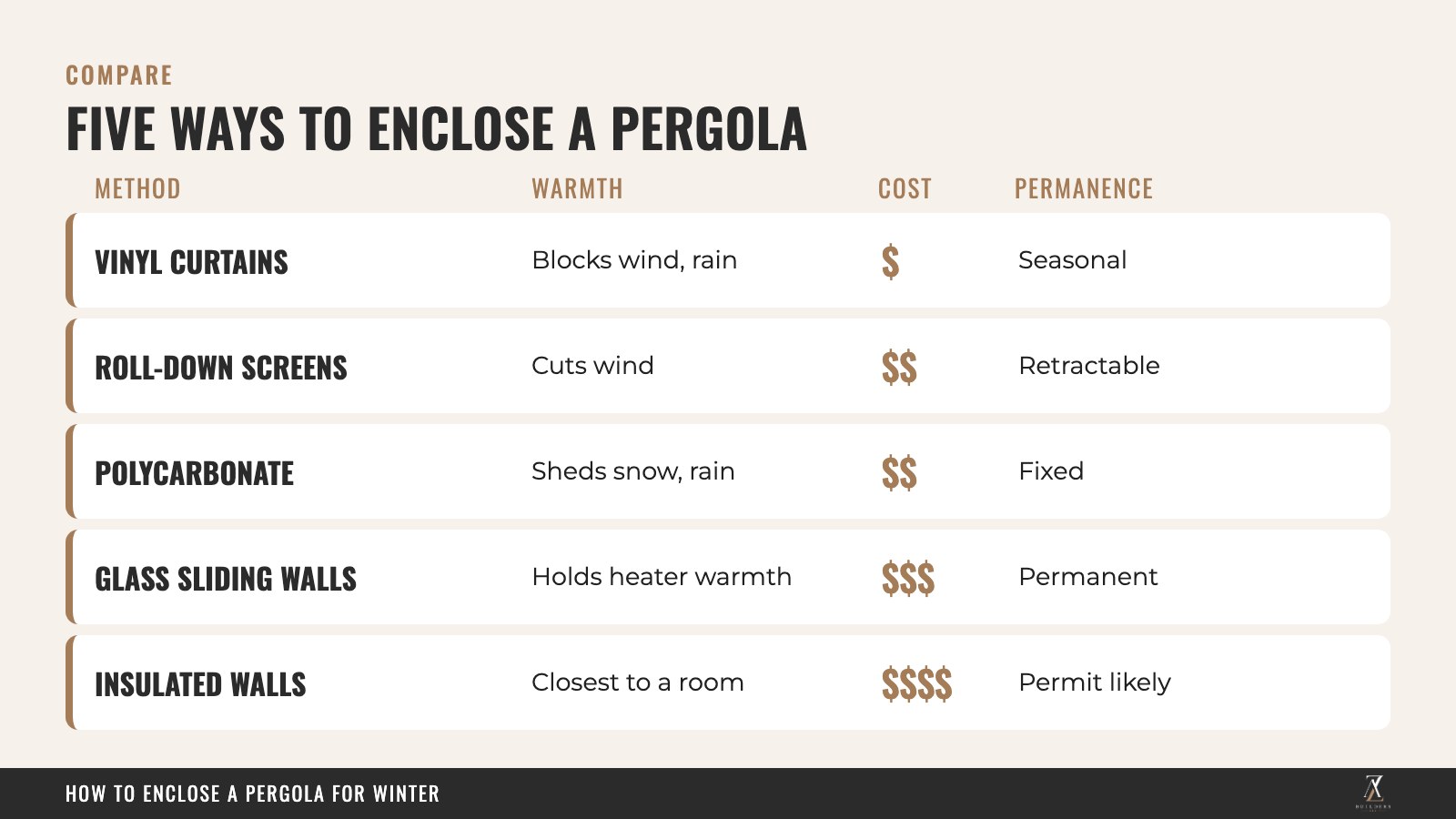
Curtains and screens suit a pergola you want to open again in spring. Panels and glass suit an owner who wants a fixed winter room. The same manufacturer advises enclosing two or three sides and leaving one side partly open for air.
- Vinyl curtains: grommets, snaps, or bungees hold them with no drilling.
- Roll-down screens: a track or cassette on the beam lets the screen drop on demand.
- Polycarbonate: corrugated or flat sheets screw onto the top slats or between posts.
- Glass walls: sliding doors run on a track set into the pergola frame.
Each material also loads the frame differently, so the question of whether the pergola can take an enclosure comes next.
Can You Enclose a Pergola
Yes, you can enclose a pergola when the frame carries the added weight and wind load. A light curtain adds little load. Glass, panels, and a solid roof add more.
A wall that is closed in winter catches wind like a sail. Posts need solid footings and post bases for that load. A ledger board ties an attached pergola to the house, and the guide to house attachment covers that hardware.
Wind direction guides the layout. In winter, the walls facing the prevailing wind take the heaviest load, so those sides get the sturdiest material. Sides facing the sun can use screens or glass to catch warmth and light.
Aluminum and steel frames suit heavier enclosures. Wood frames suit curtains and screens unless the builder confirms the posts and beams. A pergola that fails this check needs reinforcement before any wall goes up. The steps below follow the safe order.
How to Enclose Your Pergola Step by Step
Follow seven steps from roof to heat. These steps show how to enclose a pergola for winter without skipping the load and permit checks. The graphic below shows the order.

- Ask the local building department for the design snow load and the permit rules for your project.
- Inspect the posts, beams, and footings, and tighten every bolt.
- Cover the roof with a louvered, polycarbonate, or fabric roof that fits the snow load.
- Enclose the windward sides first with curtains, screens, panels, or glass.
- Leave one side or a vent partly open for airflow.
- Add a heater that fits the manual clearances and keeps the area ventilated.
- Add lighting and weatherproof outlets, then test the setup in wind.
Homeowners planning winter outdoor living finish steps one and two in a single site visit with a builder. The roof then becomes the main design question, which the next section covers.
How to Close In a Pergola Roof for Snow
Use a roof rated for your local snow load. The county or city building department sets that design snow load. The Washington residential code says the local jurisdiction sets design criteria in Table R301.2.
Snow weight also changes with moisture. The Federal Emergency Management Agency (FEMA) notes that melted and refrozen snow significantly increases roof load. Ice dams add a concentrated load at the edges.
Manufacturers publish ratings for their own frames. One aluminum pergola kit lists 25 pounds per square foot (psf) of snow load. A rating applies only to that product as installed, so a homemade enclosure needs a builder's check.
Louvered roofs open to let snow fall through and close for rain. An owner who wants that setup can read about a roof that closes before choosing. Polycarbonate sheets also pass light and block ultraviolet rays.
Polycarbonate sheets from one maker block 99.9 percent of ultraviolet light. Glass overhead has its own rule. The International Building Code requires laminated, heat-strengthened, or fully tempered glass in sloped glazing. With the roof set, heat is the next concern.
How to Keep a Pergola Warm in Winter
Block wind on two or three sides and add a heater. Walls hold heat, and the heater adds it. Both need airflow, so leave one opening.
Patio heater manuals state the clearances. One propane heater manual requires 36 inches overhead and 24 inches at the sides. Another requires 18 inches overhead, 24 inches at the sides, and 78 inches beneath the reflector.

The graphic above shows those manual distances against a pergola beam. Use the number in your own manual, because models differ. Heaters under a low wood beam can fail these distances.
Carbon monoxide (CO) is the main danger in an enclosed pergola. Both manuals say to use the heater outdoors only and never in an enclosed or unventilated area. The US Environmental Protection Agency lists unvented gas and kerosene heaters as CO sources.
A wood or gas fire feature follows separate rules. The National Fire Protection Association (NFPA) says to keep a fire pit 10 ft from anything that burns. The guide to fire pit safety covers the overhead distances. An electric heater avoids combustion gases, though it still needs a manual-listed clearance.
Thermal drapes add a layer of insulation behind clear vinyl. Heavy curtains hang from a rod or track and close tight at the corners. Gaps at the bottom let cold air flow in, so weight the hems.
Heat sets the comfort level, while code sets the legal limits. The next section covers permits.
Do You Need a Permit to Enclose a Pergola
Yes, a permit is likely when the enclosure becomes a heated, glazed room. Curtains that hang loose usually stay outside the permit rules. A room with walls, windows, and heat counts as living space under the code.
The Washington residential code sets tests for habitable rooms. Glazing must reach at least 8 percent of the floor area. Required heating must come from permanent equipment, and portable heaters cannot meet that rule.
Your building department confirms what applies to your lot. The guide on pergola permit rules explains the base permit steps. Ask about the enclosure in the same call, and bring the plan.
A full conversion turns the pergola into a room addition with its own energy, structure, and egress checks. A builder can draw those plans. A pergola that stays a covered patio keeps simpler rules.
How to Use a Pergola in Winter
Use a pergola in winter by blocking wind, closing the roof, and adding safe heat. That setup suits dining, lounging, or a quiet morning coffee. How to use pergola in winter depends on how much of the space you enclose.
A pergola with curtains and a heater works well for short evenings. A pergola with glass and a closed roof works for longer stays. Winter days are short, so lighting matters.
Warm white string lights or LED bars keep the space usable after dark. Weatherproof outlets and cords rated for outdoor use are required. The walkthrough on pergola lighting ideas covers the fixing methods.
Floors matter in winter as well. A rubber-backed outdoor rug blocks cold from the slab and keeps ice from forming at the entry. Wet floors under a closed roof can stay damp, so sweep water toward the open side.
Furniture needs care too. Swap cushions for weather-resistant fabric or store them indoors. A pergola you leave open needs different protection, covered next.
How to Protect a Pergola You Leave Open for Winter
Seal the wood and clear heavy snow. Pergola Depot, a kit maker, advises sealing wood at install and again every 2 to 3 years. Clean the frame first and tighten loose screws.
FEMA advises asking the local building authority before removing roof snow. It also says to leave a couple of inches on a roof surface.
Brush snow off the slats gently with a soft broom. Never use sharp tools or mechanical equipment, since they damage the finish. Snow that slides off a louvered roof when the louvers open causes less strain.
A tight, secured vinyl or tarp cover can also shed snow. Rain still reaches the frame at the edges, so the guide to rainproofing a pergola helps with drainage and sealing. The grouped questions below cover related cases.
What Else Should You Know About Enclosing a Pergola
What Is an Enclosed Pergola Called
The name is sunroom or screened porch. Glass walls with an insulated roof make a sunroom. Screens alone make a screened porch.
Can I Convert My Pergola Into a Sunroom
Yes, with a permit and an insulated roof. The frame needs upgrades first. A builder who handles room additions can plan that work.
How Can I Enclose a Gazebo for Winter
Enclose a gazebo with the same methods: curtains, screens, panels, or glass. A gazebo already has a solid roof, so wall choice is the main task. The comparison of gazebo versus pergola explains the roof difference.
Can You Put a Tarp Over a Pergola
Yes, when tied down against wind. A loose tarp flaps and tears. A tarp is a temporary fix, not a heated enclosure.
Can You Insulate a Pergola
You can insulate a pergola only after it becomes an enclosed room. Insulated walls and a sealed roof create the space. Open slats and curtains cannot hold insulation.
Should a Pergola Be Open or Closed in High Winds
Open the louvers and roll up screens before strong wind arrives. Closed walls and fabric catch wind and strain the posts. Follow the maker's wind rating in your manual.
Frequently Asked Questions
How Much Snow Can a Pergola Hold
A pergola holds the load its maker rated it for. One aluminum kit lists 25 psf. Wood pergolas depend on lumber size and span.
Can I Leave My Pergola Up in Winter
Yes, with sealed wood and regular snow removal. Kit makers advise this routine. Disassembly is not required.
What Is the Cheapest Way to Enclose a Pergola for Winter
Clear vinyl curtains are the lowest-cost method. Mirador Outdoor lists them at $100 to $400 by pergola size. They block wind and rain but add little warmth.
Do I Need to Enclose All Four Sides of My Pergola
No, enclose two or three sides and leave one partly open. That advice comes from a pergola manufacturer. The opening keeps air moving and limits moisture.
Can I Use a Propane Heater in an Enclosed Pergola
No, manuals say propane patio heaters are for outdoor use only. They warn that using one in an enclosed space can kill you. Choose a heater rated for covered use and follow its manual.
How Does AZ Builders Help You Enclose a Pergola for Winter
AZ Builders plans every enclosure around the frame first. We check the roof load and the permit rules before choosing walls. That order protects the structure.
Our crew builds covered structures for the Wenatchee Valley climate, from curtain-ready frames to glass-walled rooms. Owners planning year-round outdoor living get the snow load and permits confirmed with the building department first.
Planning how to enclose a pergola for winter starts with a frame check. Talk to the AZ Builders carpenters about your frame, your roof, and the walls you want.


You May Also Like

How to Enclose a Pergola for Winter
Enclose a pergola for winter with vinyl curtains, screens, polycarbonate, glass, or insulated walls. Compare warmth, cost tier, permits, and safe heat.


How to Get Homeowners Insurance to Pay for a Bathroom Remodel
Homeowners insurance pays to repair sudden, accidental bathroom damage, not planned upgrades. Learn the 8 claim steps and what policies usually exclude.

How to Build a Louvered Pergola Roof
Build a louvered pergola roof in six steps, from drainage planning to a water test. Compare wood and aluminum louvers, motors, slope, and wind ratings.


